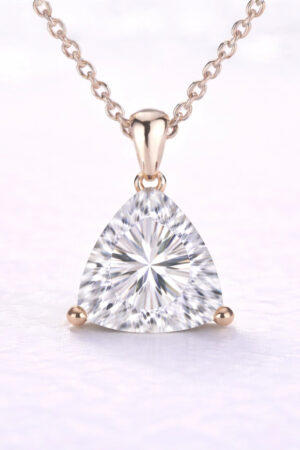
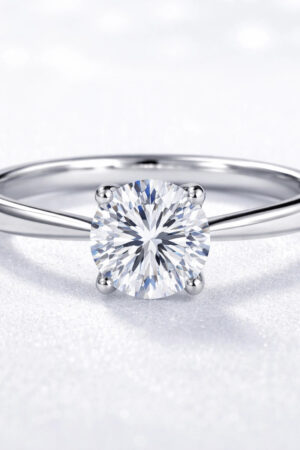
Picture this. You hold two sparkling diamonds side by side. One formed deep underground over a billion years. The other grew in a lab over a few weeks. Can you tell which is which? Go ahead, stare as hard as you want. You cannot. Nobody can, not with their eyes alone, and that includes professional jewelers. This guide explains what diamond testers actually detect, why home tests fail, and how gem labs really tell the difference.
Short Answer: No, you cannot tell a lab grown diamond from a natural one with your eyes, a loupe, or a standard diamond tester. Both are real diamonds with identical crystal structure and thermal conductivity, so both pass every basic test. Only advanced lab equipment (spectroscopy, UV fluorescence imaging, photoluminescence) and the grading certificate can confirm origin. Always buy certified stones from IGI or GIA.
Key Takeaways
- Your eyes cannot tell the difference. Lab grown and natural diamonds look identical, even under a jeweler’s loupe.
- Standard diamond testers cannot detect origin. They only confirm “this is a diamond,” not where it formed.
- Lab grown diamonds pass diamond testers because they share the same thermal and electrical conductivity as natural diamonds.
- Gem labs use advanced instruments like spectroscopy, photoluminescence, and UV fluorescence imaging to identify origin.
- The grading certificate is your proof. It states the origin clearly, so buy certified and skip the guesswork.
Can You See the Difference With Your Eyes?
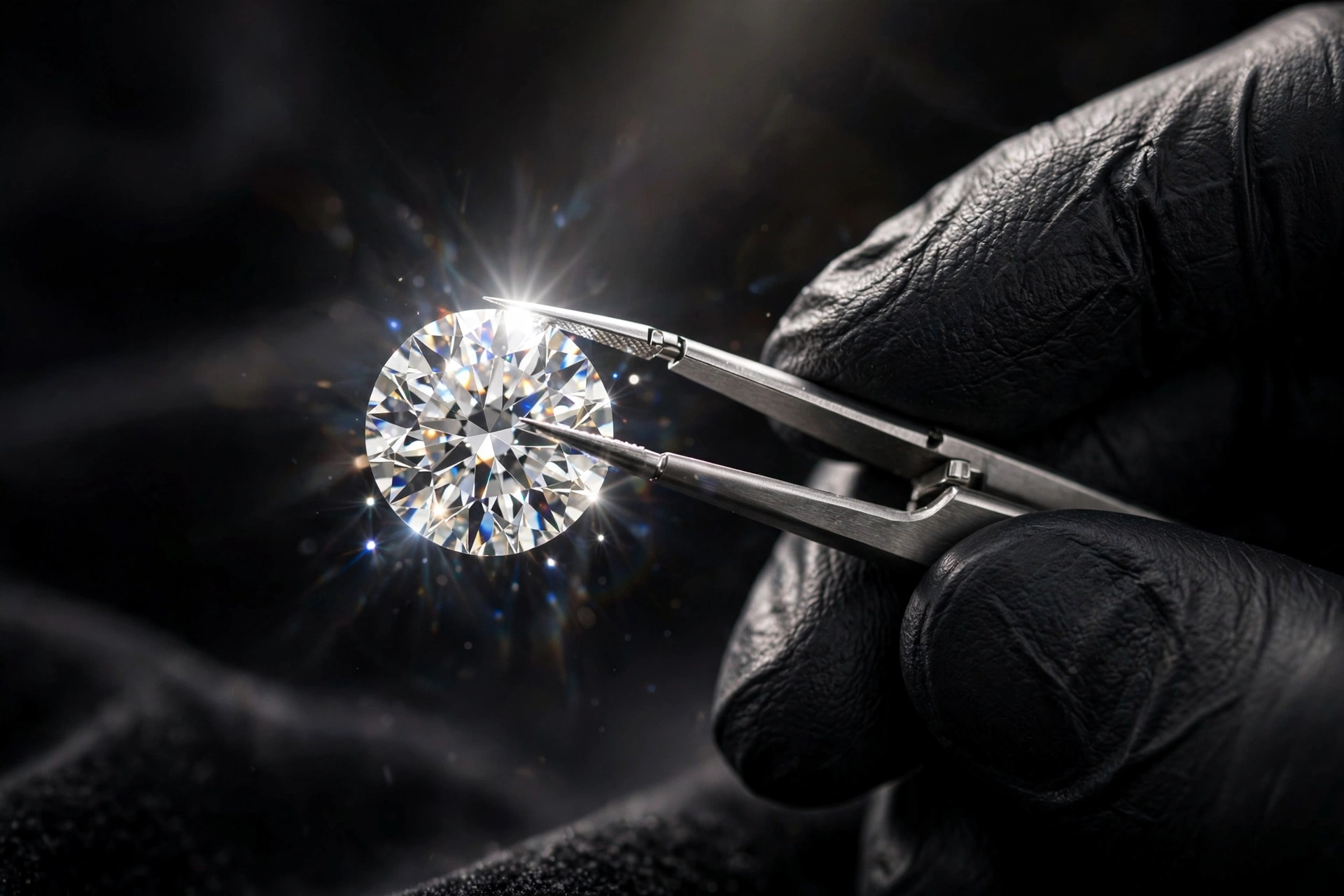
No. Full stop. This is the single most important thing to understand, so let me say it plainly: a lab grown diamond and a natural diamond of the same cut, color, clarity, and carat look exactly the same to human eyes.
Why? Because they are the same material. Both consist of pure carbon atoms locked in a diamond crystal lattice. Both bend light the same way, which means the fire, brilliance, and scintillation match perfectly. Your eyes detect light behavior, not birth certificates, and the light behaves identically.
Ever wondered why this surprises people so much? Because we associate “grown in a lab” with “fake,” and fakes usually look off. But lab grown diamonds are not fakes or imitations. They are diamonds, grown by a different process, and your eyes have no equipment for detecting origin.
What About a Jeweler’s Loupe?
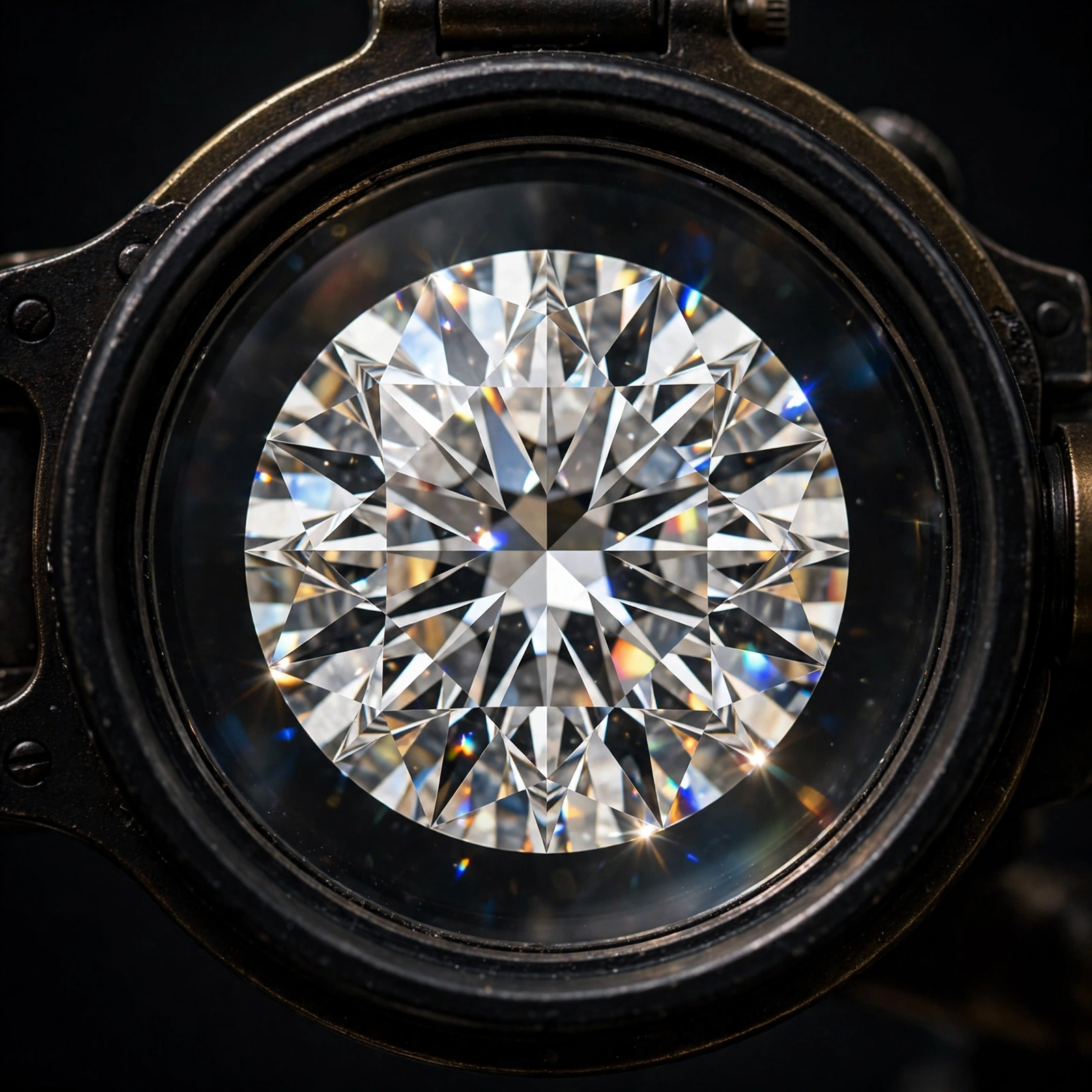
A 10x loupe reveals inclusions, those tiny internal characteristics that every diamond carries. Surely a trained jeweler can spot lab grown clues under magnification? Not reliably, no.
GIA itself states that you cannot identify a laboratory-grown diamond by looking at it through a loupe. Some lab grown stones show distinctive inclusions: HPHT diamonds can trap tiny metallic particles from the growth process, and CVD diamonds can show dark graphite spots or strain patterns. But natural diamonds have their own inclusions too, and the overlap is enormous.
Here is the problem. Inclusion patterns suggest possibilities, not conclusions. A gemologist might notice something interesting under the microscope and think, “This deserves lab testing.” That is a referral, not a diagnosis. Confirming origin requires instruments that see what eyes and loupes cannot.
Diamond Testers: What They Actually Tell You
Now we reach the heart of the matter. Those little beeping pens jewelers touch to stones. What do they actually detect, and can they expose a lab grown diamond?
Thermal Testers: The Classic Pen
The most common diamond tester is a thermal conductivity probe. You touch the heated tip to the stone, and the device measures how fast heat flows away from the tip. Diamonds conduct heat exceptionally well, much better than glass, cubic zirconia, or most other materials. Fast heat flow equals a beep and a “diamond” reading.
Lab grown diamonds conduct heat exactly like natural diamonds, because they are the same crystal. A standard thermal tester cannot distinguish lab grown from natural. It answers one question only: “Is this a diamond or a simulant?” Both lab grown and natural stones pass, every time.
So if you bought a certified lab grown diamond and someone tests it with a thermal pen, it will test as a real diamond. Because it is one.
Moissanite Testers: The Electrical Check
Here is where testers get interesting. Synthetic moissanite, a popular diamond simulant, conducts heat almost as well as diamond. Early thermal testers famously mistook moissanite for diamond, which caused real embarrassment in the trade. Modern testers solve this with electrical conductivity checks, because moissanite conducts electricity differently than diamond.
Both lab grown and natural diamonds read the same on these testers too. The electrical test separates diamond from moissanite, not lab grown from natural. Origin remains invisible to the device.
The One Weird Quirk Worth Knowing
Small HPHT-grown diamonds can occasionally confuse testers. The tiny metallic inclusions trapped during HPHT growth can trigger odd readings on some devices, occasionally even a moissanite-like response. This does not mean the stone is moissanite. It means the tester hit its limits.
This quirk is exactly why you should never treat a handheld tester as the final word. A confusing reading calls for lab testing, not panic.
Home Tests From the Internet: Please Don’t
The internet loves DIY diamond tests. Most of them are unreliable, and one is actively destructive. GIA has weighed in on the popular ones, and the verdict is not kind.
- The fog test. You breathe on the stone and watch the fog clear. GIA says the results cannot be repeated consistently. Skip it.
- The newspaper test. You try reading text through the stone. GIA calls this confusing and misleading for non-experts, because cut and size change the result.
- The water test. Diamonds sink, but so do cubic zirconia, moissanite, and glass. Sinking proves almost nothing.
- The sparkle test. Nearly any faceted gem sparkles, including simulants. Sparkle is not a diagnostic tool.
- The scratch test. GIA calls this destructive and says never to do it. Scratching your stone to prove it is hard defeats the entire purpose.
None of these tests can identify origin anyway. They cannot even reliably identify diamond versus simulant. If a test cannot answer the easy question, it definitely cannot answer the hard one.
How Gem Labs Actually Tell Them Apart
So how does anyone ever know? Professional gemological laboratories use instruments that probe the atomic and structural fingerprints left by different growth environments. Here is what they look at.
Growth Patterns Under UV Light
Natural diamonds and lab grown diamonds crystallize in different shapes, and those shapes leave patterns. Instruments like the DiamondView bathe the stone in ultraviolet light and photograph the resulting fluorescence. Natural diamonds typically show different growth zoning than HPHT or CVD stones. These patterns are invisible in normal light but unmistakable under UV imaging.
Spectroscopy and Photoluminescence
This is the heavy artillery. Spectroscopic tools analyze how the crystal absorbs and emits light at the atomic level. They detect trace elements and tiny defects: nitrogen patterns common in natural diamonds, boron in blue HPHT stones, specific vacancy defects in CVD material. Photoluminescence testing chills the stone and measures the light it emits under laser excitation, revealing defect signatures unique to each growth environment.
You will never find this equipment in a jewelry store. It lives in major gem labs, operated by specialists, and it provides the definitive answer on origin.
Inclusions That Give Hints
Remember those metallic inclusions in HPHT diamonds and graphite spots in CVD stones? Under high-powered microscopes, gemologists use these as supporting evidence. They never decide origin from inclusions alone, but inclusions guide which advanced tests to run. Think of them as clues, not verdicts.
Laser Inscriptions on the Girdle
Many lab grown diamonds carry a microscopic laser inscription on the girdle, the thin edge around the stone. It typically states the stone is laboratory-grown and includes the grading report number. You need magnification to read it, and its absence proves nothing (inscriptions can wear or stones can predate the practice). But when present, it offers quick confirmation that matches the certificate.

The Certificate Is Your Real Answer
Here is the practical takeaway from all this science: you do not need to detect origin yourself. The grading report does it for you.
Reputable lab grown diamonds come with grading reports from IGI or GIA that state the origin clearly on the document. The report lists the same 4Cs you would see on a natural diamond: cut, color, clarity, and carat weight, plus an explicit origin statement. If you want to understand exactly what those reports say, read our guide on how to read a lab grown diamond certificate.
IMO, anyone selling you an uncertified “lab grown diamond” and asking you to trust a tester reading is selling you uncertainty. Certified stones remove the entire question. The lab already did the detecting, and they used better equipment than any pen.
Myths About Detection, Busted
- Myth: A diamond tester can tell lab grown from natural. False. Testers detect diamond versus simulant, not origin. Both types pass identically.
- Myth: Lab grown diamonds fail diamond testers. False. They pass because they are real diamonds with the same thermal conductivity.
- Myth: You can spot lab grown diamonds by their “too perfect” look. False. Natural diamonds also come in flawless clarities, and lab grown stones come with inclusions too.
- Myth: Lab grown diamonds have a blue tint or glow that gives them away. False. Some natural diamonds fluoresce, some lab grown ones do too, and most show nothing unusual under normal light.
- Myth: A jeweler can always tell by looking. False. Even experienced jewelers refer origin questions to gem labs with proper instruments.
What This Means When You Shop
Stop worrying about detection and start worrying about documentation. When you shop for lab grown diamonds, the only detection that matters already happened at the grading lab.
Buy certified stones, check that the report matches the seller’s claims, and look for the girdle inscription if you want extra reassurance. A handheld tester at the counter is fine for a quick sanity check against simulants, but it will never tell you the origin story. Neither will your eyes, your loupe, or any internet home test.
FYI, this is actually good news. It means the stone you wear is judged on its beauty, not its birthplace. Pick the diamond that makes you happy, and let the certificate handle the paperwork.
My Honest Take
I love this topic because it exposes how much mythology surrounds a simple fact. People want a test, a trick, a tell. They want to squint at a diamond and decode its past. But diamonds do not carry their history on their surface. They carry it in their atoms, and reading atoms takes a laboratory.
That is not a flaw in lab grown diamonds. It is proof of how good they are. When the only way to tell the difference involves spectroscopy and photoluminescence, the “difference” has become scientifically interesting and practically irrelevant. Wear the sparkle, keep the certificate, and skip the detective work.
The Bottom Line
You cannot tell lab grown from natural diamonds with your eyes, a loupe, or a standard diamond tester. Both are real diamonds, so both pass every basic test identically. Gem labs identify origin with advanced instruments like spectroscopy, UV fluorescence imaging, and photoluminescence, plus girdle inscriptions. For shoppers, the grading certificate settles the question completely. Buy certified, and detection becomes someone else’s job.
Frequently Asked Questions
Will a lab grown diamond pass a diamond tester?
Yes, every time. Lab grown diamonds share the same thermal and electrical conductivity as natural diamonds, so standard testers read them as genuine diamonds. A tester cannot detect origin, only whether the stone is diamond or simulant.
Can a jeweler tell if my diamond is lab grown?
Not by looking. Even experienced jewelers cannot reliably determine origin with a loupe or a handheld tester. They can refer the stone to a gemological lab, where advanced instruments identify the growth method and origin.
Do I need a special tester for lab grown diamonds?
No special handheld tester identifies origin. Standard testers confirm the stone is diamond, which covers both lab grown and natural. Origin confirmation comes from the grading report and laboratory testing, not from any pen-style device.
What is the most reliable way to confirm a diamond’s origin?
A grading report from a recognized lab like IGI or GIA. The report states whether the diamond is natural or laboratory-grown, lists the 4Cs, and often corresponds to a laser inscription on the stone’s girdle.
Can UV light reveal a lab grown diamond?
Specialized UV fluorescence imaging (like DiamondView) reveals growth patterns that help labs identify origin. But a simple UV torch at home will not give you a reliable answer. Many natural and lab grown diamonds show no distinctive reaction under basic UV light.
Should I worry that my lab grown diamond will be mistaken for fake?
No. It will test as a real diamond on every standard tester because it is one. Keep the grading certificate with the stone, and you have documented proof of exactly what you own.
Sources
GIA publishes guidance on diamond testing and lab grown identification: https://www.gia.edu. IGI grades lab grown diamonds and documents detection methods: https://www.igi.org. The FTC’s Jewelry Guides govern how sellers must describe lab grown diamonds: https://www.ftc.gov/legal-library/browse/rules/jewelry-precious-metals-pewter-jewelry-guides. Written by the I Love Jewelry Team. Last updated: October 2026.