Walk into any jewellery discussion online and you will find the same confident claim: “Nobody can tell the difference between a diamond and a cubic zirconia.” It sounds convincing. It is also wrong in the ways that matter. Cubic zirconia and lab grown diamonds get confused constantly because both are affordable alternatives to mined diamonds, but they are not the same thing at all. One is a real diamond. The other is a convincing lookalike with an expiration date on its sparkle. This guide lays out the real difference: what each stone is, how they compare on looks, durability, tester results and price, and when each one actually makes sense.
Short Answer: Lab grown diamonds are real diamonds (pure carbon, Mohs 10 hardness) while cubic zirconia is a diamond simulant made of zirconium dioxide (Mohs 8 to 8.5). CZ looks convincing at first but scratches, clouds, and loses brilliance within 1 to 3 years of regular wear, while a lab grown diamond lasts forever like any diamond. CZ costs under $50 per carat; lab grown diamonds cost hundreds per carat but hold their beauty permanently. Choose lab grown for anything you want to keep; CZ only for short-term fashion.
Key Takeaways
- Lab grown diamond is a real diamond. Same carbon crystal, same hardness, same permanence as a mined diamond.
- Cubic zirconia is a simulant, not a diamond. It imitates the look from a different material, zirconium dioxide.
- CZ shows more rainbow fire than diamond (higher dispersion), which is actually the giveaway, not a feature.
- CZ fails diamond testers; lab grown diamonds pass them, because they are diamonds.
- CZ is nearly free (under $50/ct) but wears out; lab grown costs more and lasts forever. You are choosing between disposable and permanent.

The One-Sentence Difference
Here is the whole debate in one line: a lab grown diamond IS a diamond, while cubic zirconia only PLAYS one. Everything else in this guide is just the evidence for that sentence. Lab grown diamonds form from pure carbon in the same crystal structure nature uses. Cubic zirconia is zirconium dioxide, a completely different material engineered to look similar. One belongs in the diamond family. The other is a talented impersonator.
What Each Stone Actually Is
Lab Grown Diamond: The Real Thing, Different Birthplace
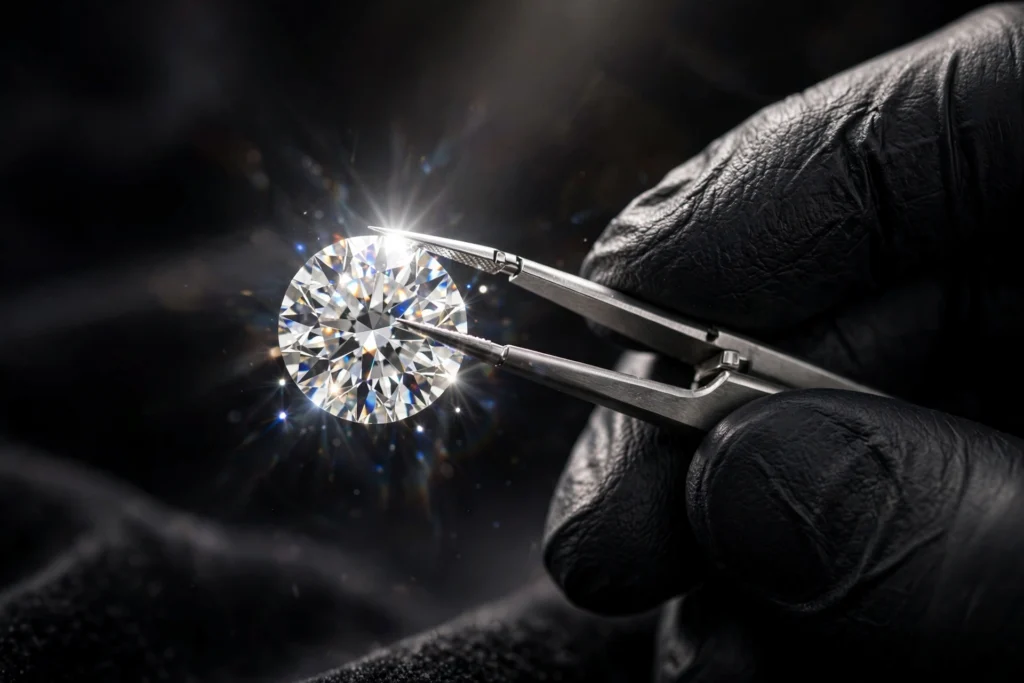
A lab grown diamond is pure carbon crystallized into the diamond lattice, exactly like a mined diamond. Growers use HPHT (High Pressure High Temperature) or CVD (Chemical Vapor Deposition) to create it. It scores 10 on the Mohs hardness scale, bends light with a refractive index of 2.42, and carries the same fire (dispersion 0.044) as any natural diamond. Gem labs grade it with the same 4Cs. It is not “almost a diamond” or “like a diamond.” It is a diamond, full stop. The certificate says so, the tester says so, and physics says so.
Cubic Zirconia: The Brilliant Impersonator
Cubic zirconia is zirconium dioxide (ZrO2), a synthetic material developed by Soviet scientists in the 1970s and commercialized as a diamond simulant. It was engineered specifically to mimic diamond’s sparkle at a tiny fraction of the cost, and at that job it succeeds impressively at first glance. But mimicry is not identity. CZ has a Mohs hardness of 8 to 8.5, a refractive index of 2.15 to 2.18, and a density of 5.6 to 6.0 g/cm3 (versus diamond’s 3.52). Those numbers tell the real story: softer, less brilliant, and noticeably heavier than the diamond it imitates.
Head-to-Head: Lab Grown Diamond vs Cubic Zirconia
| Property | Lab Grown Diamond | Cubic Zirconia |
|---|---|---|
| What it is | Real diamond (pure carbon) | Diamond simulant (zirconium dioxide) |
| Mohs hardness | 10 (hardest known) | 8 to 8.5 |
| Refractive index | 2.42 | 2.15 to 2.18 |
| Dispersion (fire) | 0.044 | 0.058 to 0.066 (more rainbow flash) |
| Density | 3.52 g/cm3 | 5.6 to 6.0 g/cm3 (feels heavier) |
| Diamond tester result | Passes (it is diamond) | Fails (not diamond) |
| Durability | Forever; resists scratching | Scratches and clouds in 1 to 3 years |
| Typical price | Hundreds per carat | Under $50 per carat |
| Certification | IGI/GIA grading reports | None (fashion jewellery) |
Can You See the Difference? Side by Side
Fresh out of the box, in a jewellery store’s flattering light, CZ looks remarkably convincing. That is the whole point of its existence. But put the two side by side and differences emerge.
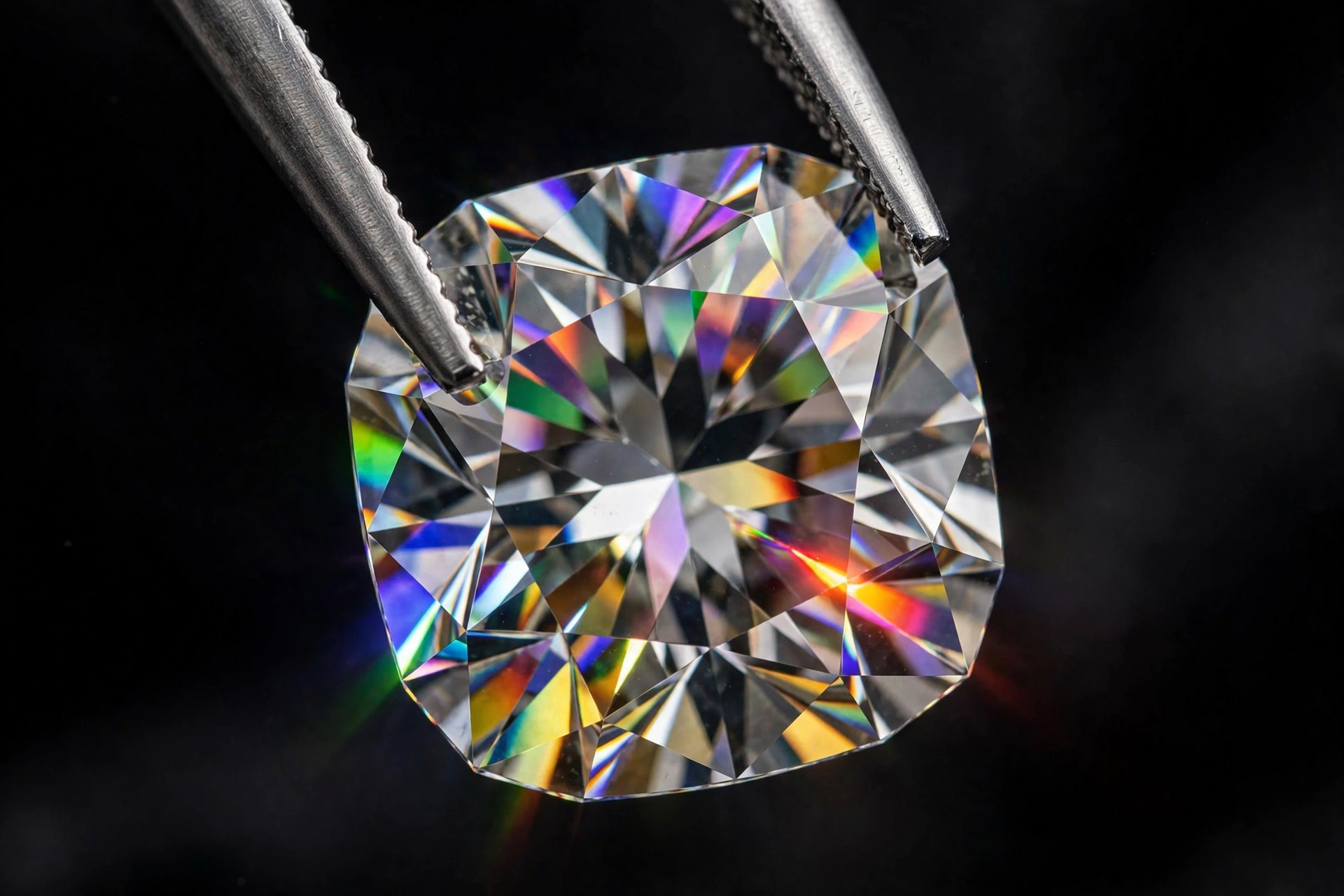
Fire gives CZ away. CZ’s higher dispersion (0.058 to 0.066 versus diamond’s 0.044) means it throws off more rainbow-colored flashes. Beginners read this as “extra sparkly.” Trained eyes read it as a tell. Diamond fire is crisp white light with restrained rainbow accents; CZ fire is a louder, more disco-ball rainbow. Once you know what to look for, the difference is obvious.
Brilliance favors diamond. Diamond’s higher refractive index (2.42 vs 2.15 to 2.18) returns more white light to the eye. A well-cut lab grown diamond looks brighter and livelier; CZ looks slightly duller by comparison, like a television with the brightness turned down one notch.
Weight is the secret test. Pick up two same-size stones and the CZ feels noticeably heavier. At 5.6 to 6.0 g/cm3 versus diamond’s 3.52, a CZ of “1 carat size” actually weighs around 1.7 carats. Jewellers notice this instantly. You would too, once someone points it out.
And here is the cruel part for CZ: the difference grows with time. A brand-new CZ fools most people. A two-year-old CZ fools nobody, because daily wear has scratched and dulled its surface. More on that next.
Durability: Where the Real Gap Lives
This is the section that should decide your purchase, because it is the difference between jewellery and costume.
Diamond is forever for a physical reason. At Mohs 10, nothing in daily life scratches a lab grown diamond except another diamond. It survives decades of wear, cleaning, and accidental knocks with its polish intact. Your grandchildren could wear it.
CZ wears out, measurably. At Mohs 8 to 8.5, CZ is softer than everyday hazards. Dust contains quartz (Mohs 7), which sounds safe until you remember that years of tiny abrasions accumulate. CZ in daily-wear rings typically shows visible scratching and a cloudy, dull surface within 1 to 3 years. It also absorbs skin oils and lotions more readily, which film over the surface and kill the sparkle faster.
Think of it this way: a lab grown diamond is a purchase, while CZ is a rental with a short lease. If the piece matters to you, permanence is not a luxury. It is the entire point.
The Diamond Tester Test
Standard diamond testers measure thermal conductivity. Diamond conducts heat exceptionally well; CZ does not.
Lab grown diamond: passes. It is diamond, so the tester beeps happily. No drama.
Cubic zirconia: fails. The tester stays silent or flags it as simulant. This is the fastest, most objective way to separate the two, and it takes about three seconds at any jeweller’s counter.
IMO, this single test settles every internet argument about whether CZ is “basically a diamond.” A $20 tester knows the answer. It is not.

The Price Math (and Why It Misleads)
On sticker price alone, CZ wins by a landslide. CZ costs under $50 per carat, often under $20 for smaller stones. A finished CZ ring can cost less than a nice dinner. Lab grown diamonds cost hundreds per carat, so a 1-carat lab grown solitaire runs many times the price of its CZ twin.
But price-per-year tells a different story. A CZ ring worn daily needs replacing every 1 to 3 years as it dulls. Over a decade, you might buy that “cheap” ring four or five times, and each replacement looks worse than the last while your lab grown diamond still sparkles like day one. The cheapest option is only cheap if you stop counting after the first purchase.
None of this means CZ is a scam. It means CZ has a job description: affordable, short-term sparkle. Problems start when sellers (or buyers) pretend it has a different job.
When Cubic Zirconia Actually Makes Sense
Fairness demands this section, because CZ is not useless. It is excellent at specific jobs.
- Travel jewellery. Heading somewhere you would never risk real diamonds? CZ gives you the look with zero anxiety about loss or theft.
- Trying a style. Unsure whether you actually like a halo setting or a 3-carat look? Test-drive it in CZ for almost nothing before committing real money.
- Costume and events. One-night occasions, themed parties, photoshoots. CZ shines brightly for a evening and nobody examines it under a loupe.
- Trendy pieces. That ultra-fashionable design you will be bored of in six months? Do not put a real diamond in it. CZ is perfect.
- Gifts where budget is the whole point. A sweet, sparkly gift for a young teen, for example. Expectations match reality.
The pattern: CZ works when the timeline is short and the stakes are low. It fails when you ask it to be permanent.
When Lab Grown Diamond Wins (Almost Everything Else)
For everything CZ cannot do, lab grown diamond steps in at a fraction of the mined-diamond price.
- Engagement rings. This is the big one. A ring symbolizing permanence should be made of something permanent. Our engagement ring buying guide walks through the whole decision.
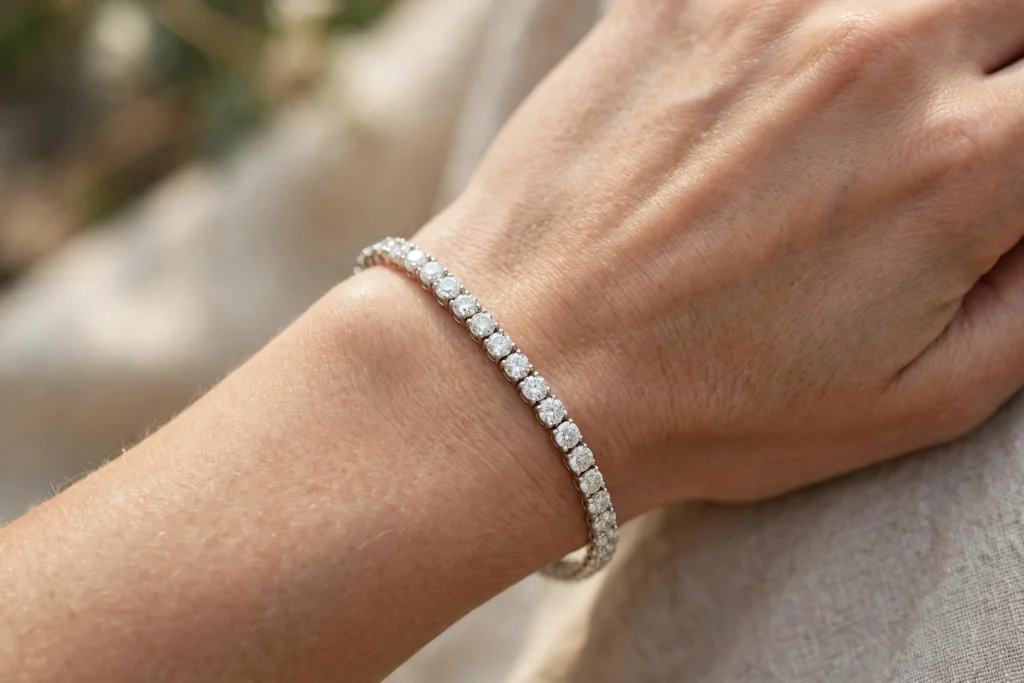
- Daily-wear jewellery. Studs, pendants, tennis bracelets. Anything that lives on your body deserves diamond hardness.
- Milestone gifts. Anniversaries, graduations, big birthdays. The stone should outlast the memory of the price.
- Anything you want to pass down. Heirlooms cannot be made of a material with a 2-year sparkle warranty.
- When you want the real light performance. That crisp diamond brilliance and fire that CZ approximates but never quite matches.
Browse the lab grown diamond collection and compare for yourself. The price gap to mined diamonds is enormous; the quality gap is zero.
5 Traps to Avoid
- “Diamond-like” marketing. Phrases like “diamond simulant,” “diamond alternative,” and “lab-created diamond alternative” all mean one thing: not a diamond. Read past the adjectives.
- CZ sold at diamond prices. Some sellers set CZ in nice metals and charge hundreds. Check what the center stone actually is before you pay for the setting.
- Believing “nobody can tell.” Fresh CZ fools casual glances, not jewellers, not testers, and not time. Anyone telling you otherwise is selling something.
- Expecting CZ to stay pretty. It will not. Budget for replacement or accept the dulling. Surprise is the only thing worse than the scratching.
- Confusing CZ with lab grown. They are sold side by side online as “affordable diamond options,” which muddles two completely different purchases. One is a diamond. One is not. Now you know.
My Honest Take
FYI, I have nothing against cubic zirconia. It democratized sparkle and it does its job well. My problem is only with confusion: the idea that CZ and lab grown diamonds are interchangeable “cheap diamond options.” They are not in the same category. One is a diamond with a lab birthplace. The other is a different material wearing a diamond costume.
Buy CZ when you want fun, temporary sparkle for little money. Buy lab grown when you want a diamond. Both are legitimate choices. Just make each choice with your eyes open, and never pay diamond money for a simulant, or simulant expectations for a diamond.
The Bottom Line
Lab grown diamonds are real diamonds: pure carbon, Mohs 10, permanent, and certified. Cubic zirconia is zirconium dioxide: a convincing simulant that costs under $50 per carat but scratches, clouds, and dulls within a few years. CZ fails diamond testers; lab grown passes. Choose CZ for short-term fashion and travel; choose lab grown diamond for engagement rings, daily wear, and anything you want to last. The real difference is not the sparkle on day one. It is the sparkle on day one thousand.
Frequently Asked Questions
Is cubic zirconia a real diamond?
No. Cubic zirconia is zirconium dioxide, a synthetic material made to imitate diamond’s appearance. Lab grown diamonds, by contrast, are real diamonds made of pure carbon. Only the lab grown stone is a diamond in any scientific or gemological sense.
Can a jeweller tell CZ from a real diamond?
Easily. A standard diamond tester identifies CZ in seconds because it does not conduct heat like diamond. Jewellers also spot the excessive rainbow fire, lower brilliance, and heavier weight. Time makes it even more obvious as CZ scratches and dulls.
How long does cubic zirconia last?
In daily-wear rings, CZ typically shows visible scratching and clouding within 1 to 3 years. In occasional-wear pieces like pendants or earrings, it lasts longer because it takes less abuse. It never lasts like diamond, which is effectively permanent.
Why does CZ look more “rainbow” than diamond?
CZ has higher dispersion (0.058 to 0.066) than diamond (0.044), so it splits light into rainbow flashes more aggressively. Beginners mistake this for extra sparkle, but gemologists recognize the exaggerated fire as a classic simulant tell.
Is CZ worth buying at all?
Yes, for the right jobs: travel jewellery, style experiments, one-night events, and trendy pieces you will not wear for years. It is terrible value for engagement rings, daily wear, or anything meant to last, where lab grown diamond wins completely.
Will my CZ ring turn cloudy?
With regular wear, yes. Surface scratches accumulate, oils film over the stone, and the polish dulls. This usually becomes noticeable within 1 to 3 years for rings. Professional repolishing can temporarily help, but the softness that caused it remains.
Sources
GIA explains diamond simulants including cubic zirconia: https://www.gia.edu. IGI grades lab grown diamonds and documents their properties: https://www.igi.org. The FTC’s Jewelry Guides govern how sellers must describe diamonds versus simulants: https://www.ftc.gov/legal-library/browse/rules/jewelry-precious-metals-pewter-jewelry-guides. Written by the I Love Jewelry Team. Last updated: October 2026.