Your ring sparkled like crazy on day one, and now it looks… tired. Before you panic or pay a jeweller, hear this: your diamond is fine. An invisible film of lotion, soap, and everyday life is dulling its fire, and you can fix it at home in five minutes. This guide shows you exactly how to clean and care for lab grown diamond jewellery, what to avoid, and when to call a professional.
Short Answer: Clean lab grown diamond jewellery at home with warm water, mild dish soap, and a soft toothbrush. Soak for 20 to 30 minutes, scrub gently, rinse, and dry with a lint-free cloth. Avoid bleach, abrasive cleaners, and harsh chemicals. Store pieces separately in soft pouches, and get prongs checked by a jeweller once a year.
Key Takeaways
- Warm water plus mild dish soap cleans diamonds perfectly. You need no special products for routine cleaning.
- Dullness comes from surface buildup, not from damage. Regular cleaning restores full sparkle every time.
- Never use bleach, chlorine, or abrasive cleaners on diamond jewellery. They damage metals and settings.
- Store diamonds separately. Diamonds scratch every other gemstone and metal, including each other.
- Get a professional check once a year for loose stones, worn prongs, and general wear.
Why Your Diamond Looks Dull (It Is Not the Diamond)
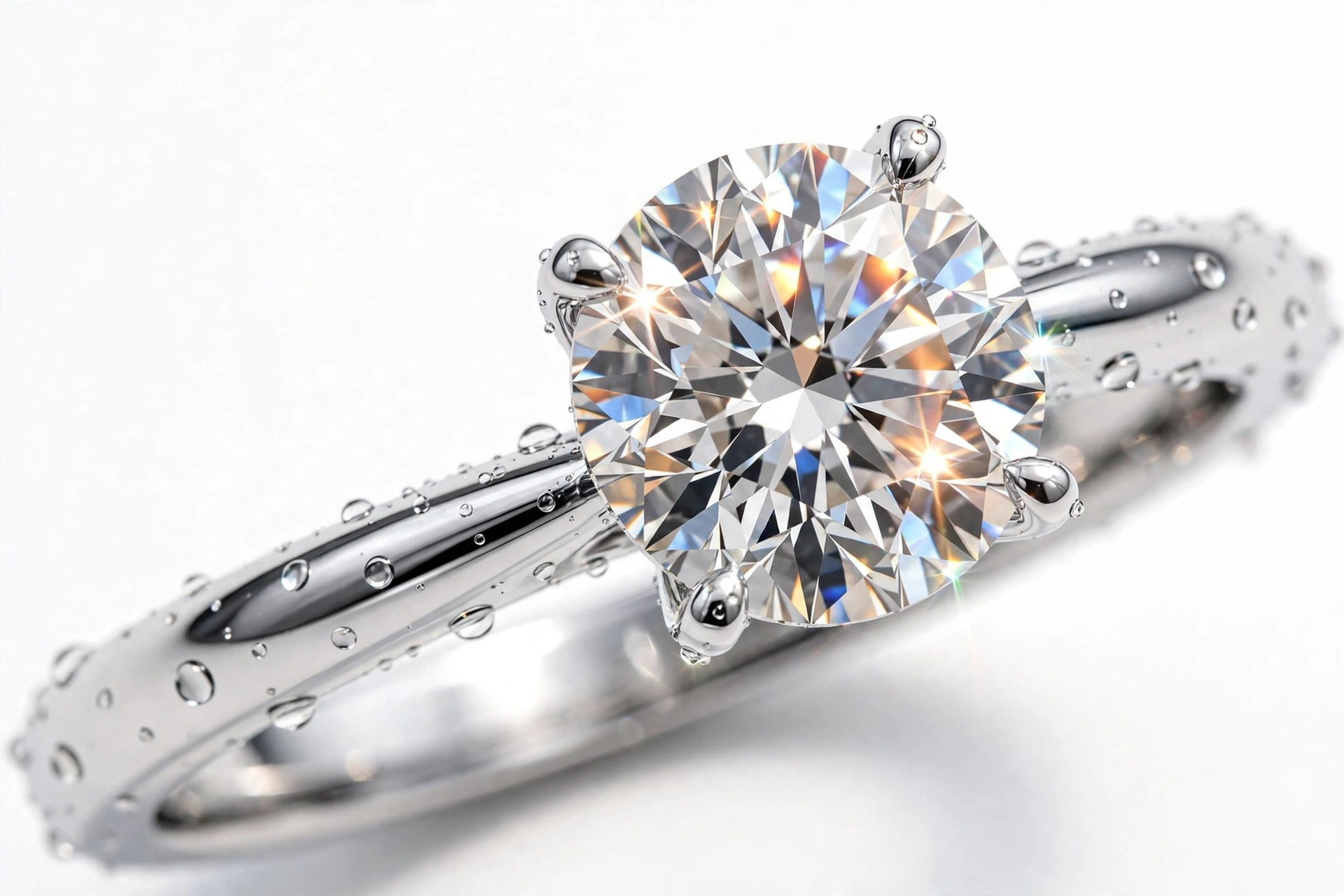
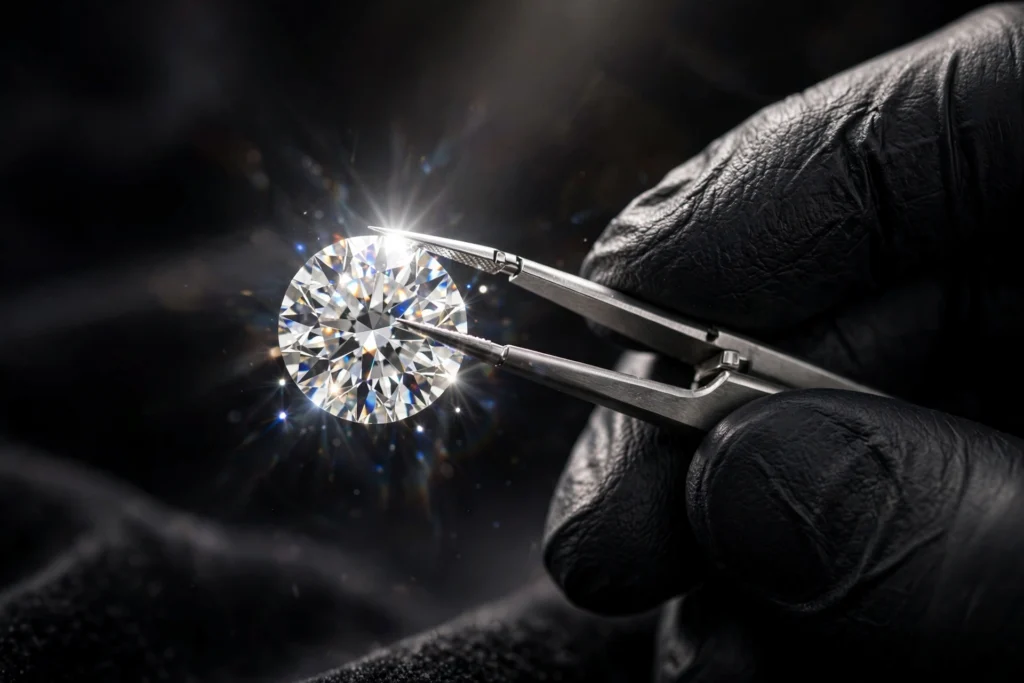
Here is the truth most guides bury: diamonds do not lose sparkle, but the gunk on them does a great impression of it. Every day, your jewellery collects hand lotion, sunscreen, soap residue, cooking oils, and dust. This invisible film coats the facets and blocks light from entering and exiting the stone properly. The diamond underneath remains flawless, but you see it through a dirty window.
Lab grown diamonds face exactly the same buildup as natural ones, because the problem is environmental, not structural. A quick clean removes the film completely, and the stone underneath shines like new. Does your phone screen look worse after a week of fingerprints? Same principle, same easy fix. Once you understand this, you will never fear dullness again.
The 5-Minute Home Cleaning Method
This method works for rings, necklaces, bracelets, and earrings, and it costs almost nothing. Follow these steps in order.
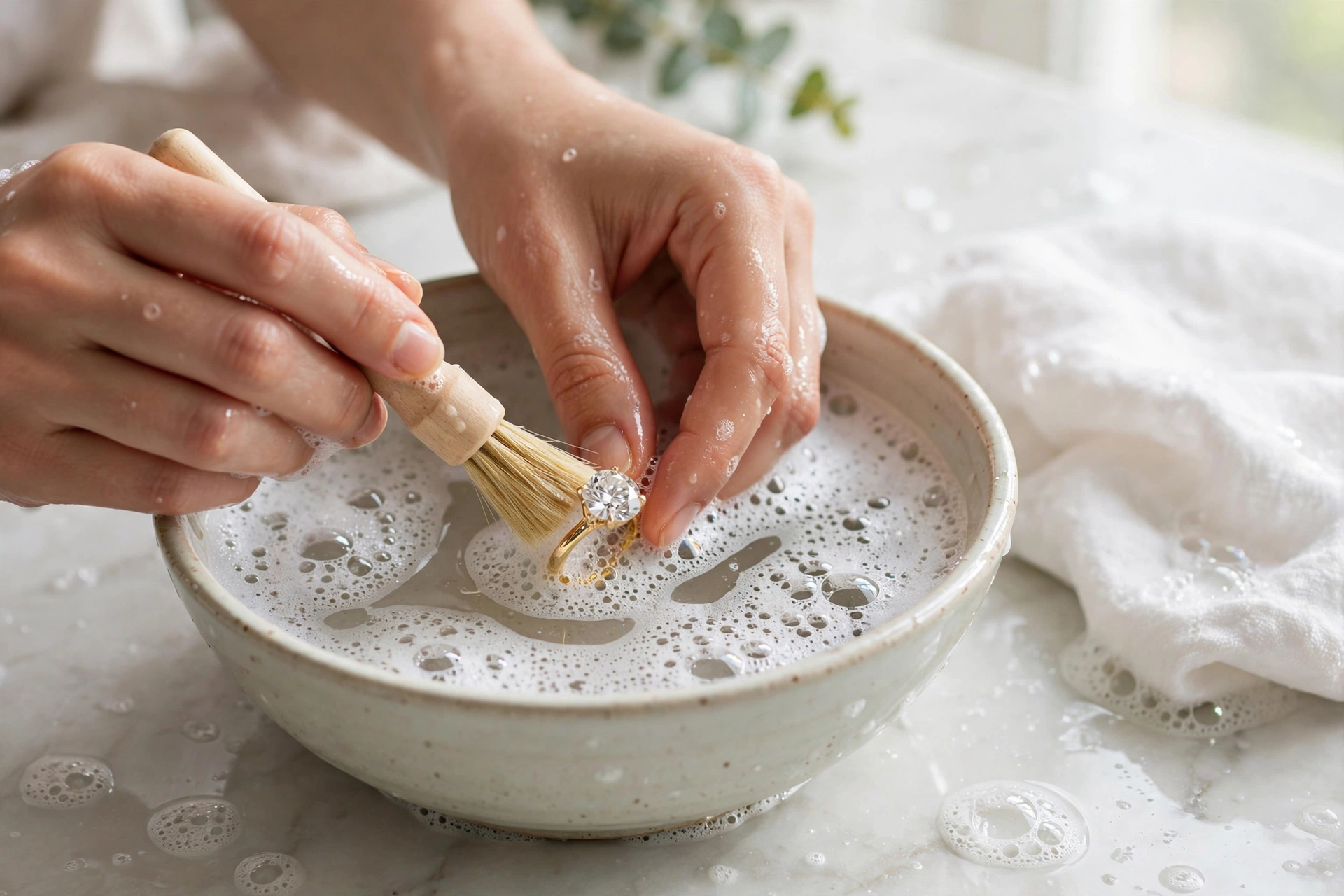
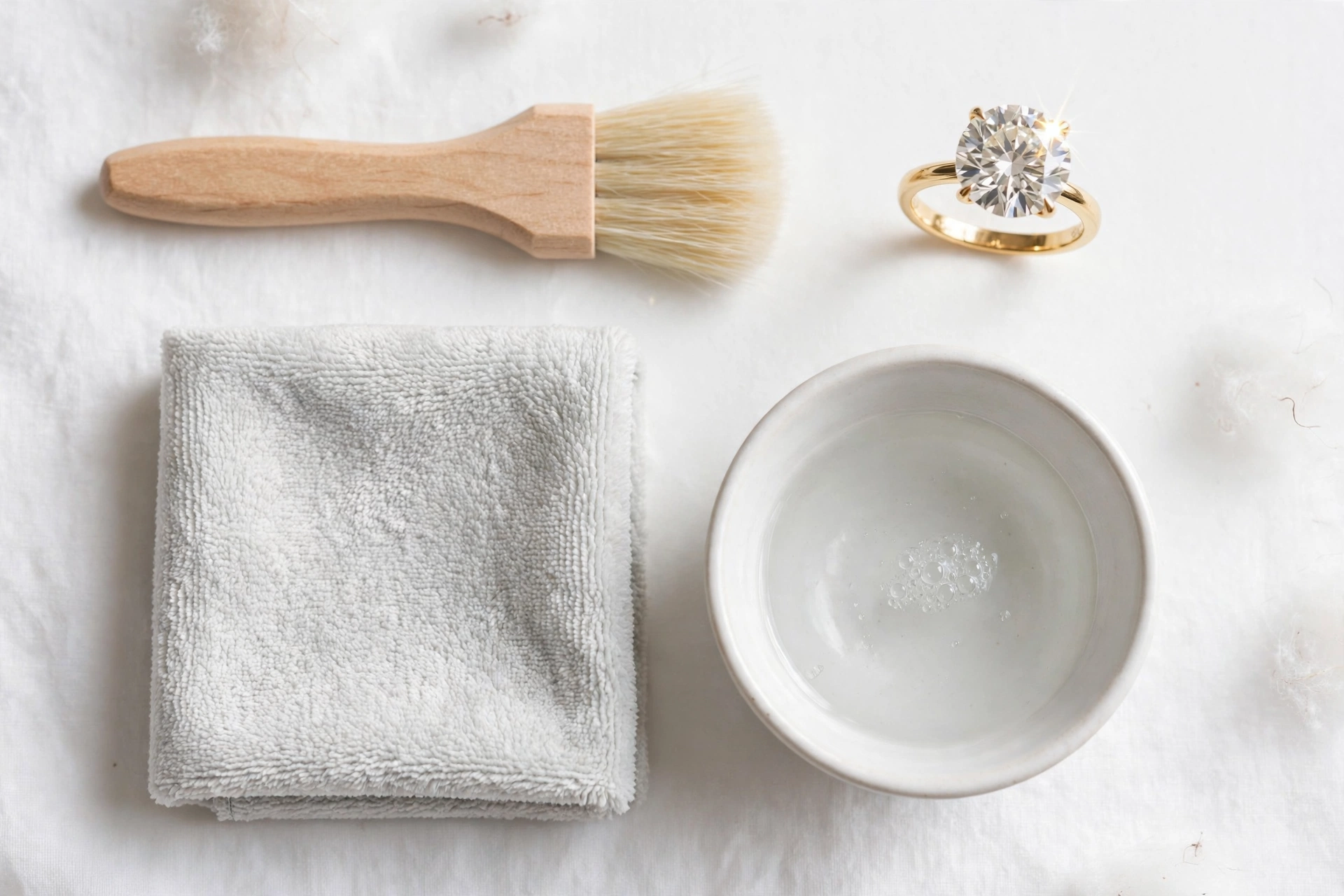
- Mix your solution. Fill a small bowl with warm (not hot) water and add a few drops of mild dish soap. Swirl gently to mix. You want lukewarm water, because extreme heat can loosen some settings and thermal shock stresses stones.
- Soak for 20 to 30 minutes. Place your jewellery in the bowl and let it soak. The soapy water loosens oils, lotions, and grime trapped around prongs and under stones. This waiting does most of the work for you.
- Scrub gently with a soft toothbrush. Use a soft-bristled toothbrush, never medium or hard, and scrub around the stone, under the setting, and along the band. Pay special attention to the back of the stone where grime hides. Gentle pressure is plenty.
- Rinse under warm running water. Rinse thoroughly to remove all soap residue, because leftover soap leaves its own film. Plug the sink or rinse over a bowl, because dropping a ring down the drain ruins your whole day.
- Dry with a lint-free cloth. Pat dry with a soft, lint-free cloth or microfiber towel. Avoid paper towels, which can leave fibers and lightly scratch metals. Let the piece air dry fully before storing.
Do this every two to four weeks for pieces you wear daily, and your diamonds will never look tired.
What NOT to Do
Good intentions destroy more jewellery than neglect does. Avoid these common mistakes completely.
- Never use bleach or chlorine. These chemicals pit and discolor gold alloys, weaken prongs, and can damage some gemstones set alongside your diamonds. Keep jewellery far from pools and cleaning products.
- Never use toothpaste. It sounds clever, but toothpaste contains abrasives designed to scrub enamel. Those abrasives scratch gold, platinum, and softer accent stones.
- Never use abrasive cleaners or scouring pads. Baking soda pastes, powdered cleansers, and rough sponges scratch metal surfaces and dull polished finishes.
- Be cautious with ultrasonic cleaners. They clean diamonds effectively, but violent vibrations can loosen stones in worn prongs or damage fragile settings like pavé and tension mounts. If you use one, inspect your jewellery first or ask your jeweller.
- Never use boiling water. Extreme heat can cause thermal shock, loosen glue in some settings, and damage certain accent stones. Warm is perfect, boiling is reckless.
Caring for Different Pieces
Different jewellery types face different risks, so tailor your care slightly for each one.
Rings
Rings take the most abuse because your hands touch everything. Remove your ring for cooking, cleaning, gardening, and workouts. Check prongs monthly by gently shaking the ring near your ear and listening for rattling, which signals a loose stone. Clean rings most often, since they collect the most buildup.
Necklaces and Bracelets
Chains tangle and kink, so fasten clasps before storing and lay chains flat or hang them. Pendants collect lotion from your neck and chest, so wipe them with a soft cloth after wearing. Bracelets bang against desks and doors, so remove them during manual work. Inspect clasps regularly, because a failing clasp loses the whole piece.
Earrings
Earring backs loosen over time, so check them before each wear. Push backs wear out fastest, while screw backs and lever backs last longer. Clean behind the setting where hair products and skin oils accumulate. Store pairs together in separate compartments so they do not scratch each other.
How to Store Your Jewellery
Proper storage prevents 90% of damage, and it requires almost no effort. Follow these rules.
- Store each piece separately in a soft pouch or a lined compartment. Diamonds scratch gold, platinum, and every other gemstone, including other diamonds.
- Fasten chains and clasps before storing to prevent tangling and kinking.
- Keep jewellery in a cool, dry place away from direct sunlight and humidity, which can tarnish some metals over time.
- Use anti-tarnish strips in your jewellery box if you own silver pieces alongside your diamonds.
- Travel with a proper case, never loose in a bag. A padded travel roll with individual slots protects everything.
When to See a Professional Jeweller
Home care handles cleaning, but professionals handle structure. Book a jeweller visit in these situations.
- Once a year for a prong and setting check. Jewellers inspect prongs under magnification, tighten anything loose, and confirm stones sit securely. Many offer this free for pieces you bought from them.
- If a stone rattles or looks tilted. Stop wearing the piece immediately and get it checked. A loose stone falls out with zero warning.
- For deep professional cleaning. Jewellers use steam cleaners and professional ultrasonic equipment that restore showroom brilliance safely.
- After any hard knock. If you smash your ring against something solid, get it inspected even if it looks fine. Prongs bend microscopically.
- Before major events. Weddings, photoshoots, and proposals deserve professionally cleaned jewellery. Book a week ahead.
Daily Habits That Protect Your Diamonds
Small habits compound into years of extra life for your jewellery. Build these into your routine.
- Put jewellery on last. Apply lotion, perfume, hairspray, and makeup first, then add jewellery. Cosmetics are the top source of sparkle-killing film.
- Remove rings for manual tasks. Cooking, cleaning, exercising, and gardening all risk chemicals, impacts, and loss. IMO, the thirty seconds it takes to remove a ring saves hundreds in repairs.
- Take jewellery off before swimming. Chlorine damages metals, cold water shrinks fingers (rings slip off), and murky water swallows lost pieces forever.
- Wipe pieces after wearing. A quick wipe with a soft cloth removes the day’s oils before they harden into film.
- Insure valuable pieces. Clean jewellery still gets lost or stolen. Proper insurance means a mishap costs you a deductible, not a fortune.
My Honest Take
FYI, most people overthink jewellery care while underdoing the basics. You do not need expensive cleaning kits, fancy machines, or professional visits every month. You need warm water, dish soap, a soft toothbrush, and the habit of taking rings off before you do dumb things with your hands. The people with the sparkliest jewellery are not the ones who bought the most products. They are the ones who clean regularly and store properly. Be that person.
The Bottom Line
Clean lab grown diamond jewellery at home with warm water, mild dish soap, and a soft toothbrush every few weeks, and it will sparkle like new forever. Avoid bleach, abrasives, and boiling water completely. Store each piece separately, remove jewellery for rough tasks, and see a jeweller once a year for a structural check. Five minutes of care beats five hundred dollars of repair every time.
Frequently Asked Questions
Can I clean lab grown diamond jewellery with toothpaste?
No. Toothpaste contains abrasives that scratch gold, platinum, and softer accent stones. Use mild dish soap and warm water instead.
How often should I clean my diamond ring?
Clean rings you wear daily every two to four weeks. A quick soak in warm soapy water with a soft brush keeps them sparkling.
Is it safe to use an ultrasonic cleaner on lab grown diamonds?
Diamonds themselves handle ultrasonic cleaning well, but vibrations can loosen stones in worn prongs or fragile settings. Inspect your jewellery first or ask your jeweller.
Why does my diamond look cloudy after showering?
Soap and shampoo leave a film on the stone that dulls sparkle. This is surface buildup, not damage. Clean the piece with warm soapy water and a soft brush to restore brilliance.
Can I wear my diamond jewellery in the pool?
No. Chlorine pits and discolors gold alloys and weakens settings. Cold water also shrinks fingers, making rings slip off unnoticed.
How should I store diamond jewellery?
Store each piece separately in a soft pouch or lined compartment. Diamonds scratch all other materials, including other diamonds, so never pile pieces together.
Sources
GIA publishes jewellery care guidelines for diamond owners: https://www.gia.edu/diamond-care-cleaning. IGI provides care advice for certified stones: https://www.igi.org. The FTC’s Jewelry Guides govern diamond advertising: https://www.ftc.gov/legal-library/browse/rules/jewelry-precious-metals-pewter-jewelry-guides. Written by the I Love Jewelry Team. Last updated: October 2026.



Comments (2)