The jeweler hands you a certificate covered in grades, numbers, and tiny print, and expects you to nod like you understand it. You nod. You understand nothing. That ends today. This guide teaches you to read a lab grown diamond certificate like a pro, compares IGI and GIA head to head, and shows you exactly which details matter and which ones sellers hope you skip.
Short Answer: Both IGI and GIA certify lab grown diamonds reliably, and you should demand one of their certificates before buying any stone. GIA carries more prestige and stricter grading, while IGI certifies more lab grown diamonds and dominates online retail. Learn to check the report number, the 4Cs, the growth method, and the laser inscription, and verify everything online in two minutes.
Key Takeaways
- Never buy a lab grown diamond without an IGI or GIA certificate. No paperwork means no proof of what you own.
- GIA grades stricter and carries more prestige, while IGI grades more lab grown stones and appears on most online listings.
- Every certificate lists the 4Cs, measurements, and a unique report number. These three items tell you 90% of what you need.
- The laser inscription on the stone must match the report number. This tiny engraving links your physical stone to its paperwork.
- Verify any certificate free online at gia.edu/reportcheck or igi.org/verify before you pay.
Why Certification Matters So Much
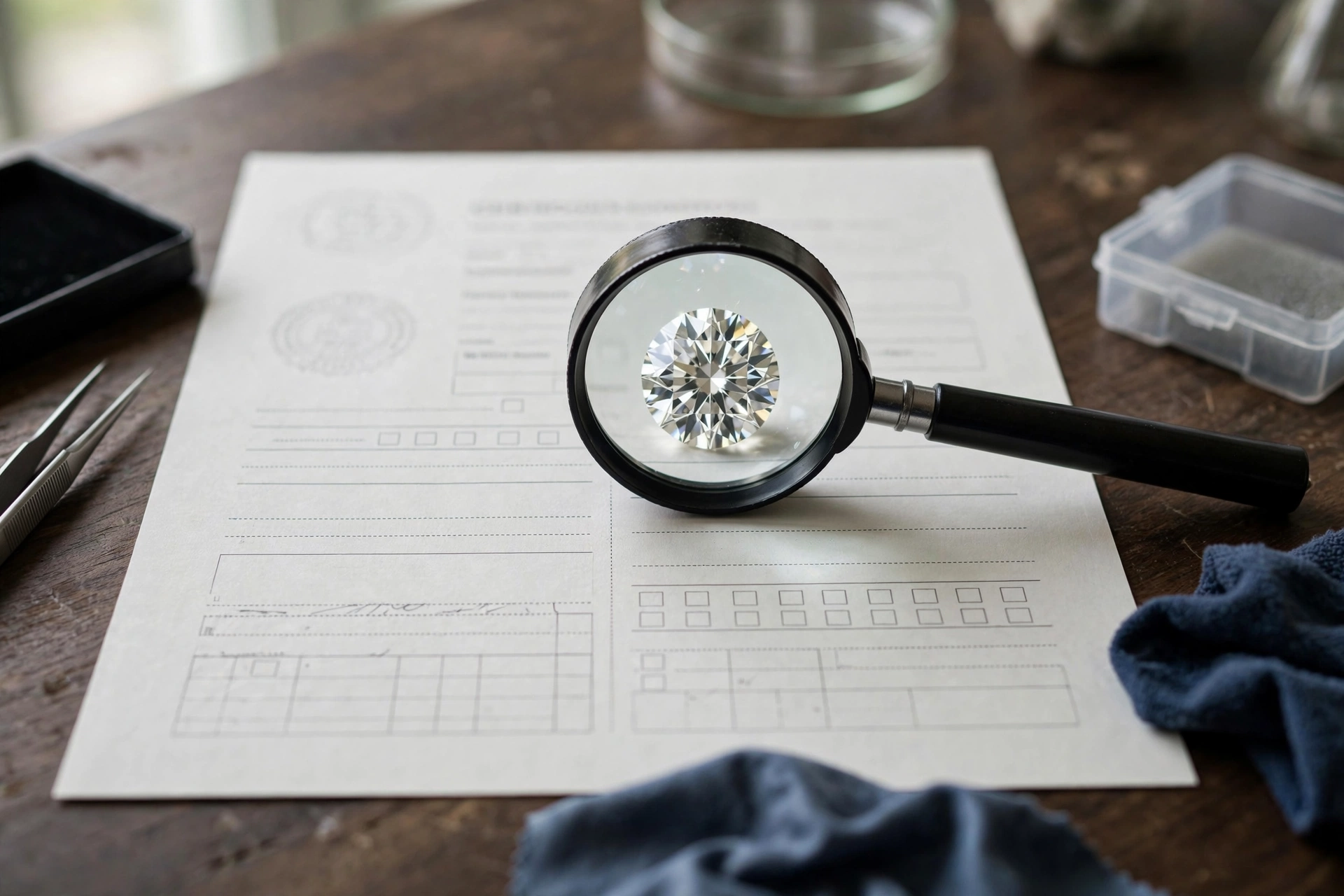
A certificate is the only thing standing between you and an expensive guessing game. Your eyes cannot measure color grades, clarity grades, or exact carat weight, and sellers know it. An independent lab examines the stone with professional equipment and documents its findings, and that document protects you from overpaying for a lesser stone. You would not buy a used car without checking its history, so do not buy a diamond without checking its report.
Certification also protects your resale and insurance options. Insurers want documented specs before they write a policy, and future buyers want proof of what they are getting. A stone with a respected certificate sells faster and for more money than an identical stone without one. The certificate costs the seller money to obtain, which is exactly why its presence signals a serious seller.
What Is GIA Certification?
The Gemological Institute of America founded modern diamond grading back in 1931, and it created the 4Cs system the whole industry uses. GIA operates as a nonprofit, and its grading lab carries the strongest reputation in the business. When GIA grades a lab grown diamond, it applies the same 4Cs scales it uses for natural stones, but it clearly labels the stone as laboratory grown on the report. You get strict, conservative grading from the most trusted name in gems.
GIA entered lab grown grading cautiously, and that history still shapes perception. The institute offers full grading reports for lab grown diamonds today, and its reports leave no doubt about the stone’s origin. Some sellers avoid GIA for lab grown because its strictness can produce lower grades than a more lenient lab would assign. You should view that strictness as a feature, not a bug.
What Is IGI Certification?
The International Gemological Institute was founded in 1975 in Antwerp, and it has become the world’s largest certifier of lab grown diamonds. IGI grades an enormous volume of lab grown stones, and most online retailers ship IGI certified diamonds by default. Its reports cover the full 4Cs plus growth method, treatments, and detailed proportions. You will encounter IGI certificates far more often than GIA ones when shopping for lab grown.
The industry generally views IGI as slightly more lenient than GIA, meaning the same stone might earn a marginally better grade at IGI. Does that make IGI certificates untrustworthy? No. IGI remains a major, legitimate international lab, and its grading stays consistent within its own system. You simply should not compare an IGI grade and a GIA grade as if they came from the same ruler. Judge each stone on its own report, and compare IGI stones against other IGI stones.
IGI vs GIA: Head to Head
| Feature | GIA | IGI |
|---|---|---|
| Founded | 1931, USA | 1975, Antwerp |
| Reputation | Most prestigious, strictest | Major lab, most lab grown volume |
| Grading style | Conservative | Slightly more lenient |
| Lab grown availability | Full 4Cs reports, clearly labeled | Full 4Cs reports, industry standard online |
| Verification | gia.edu/reportcheck | igi.org/verify |
| Best for | Buyers who want the strictest grade | Buyers shopping online selection |
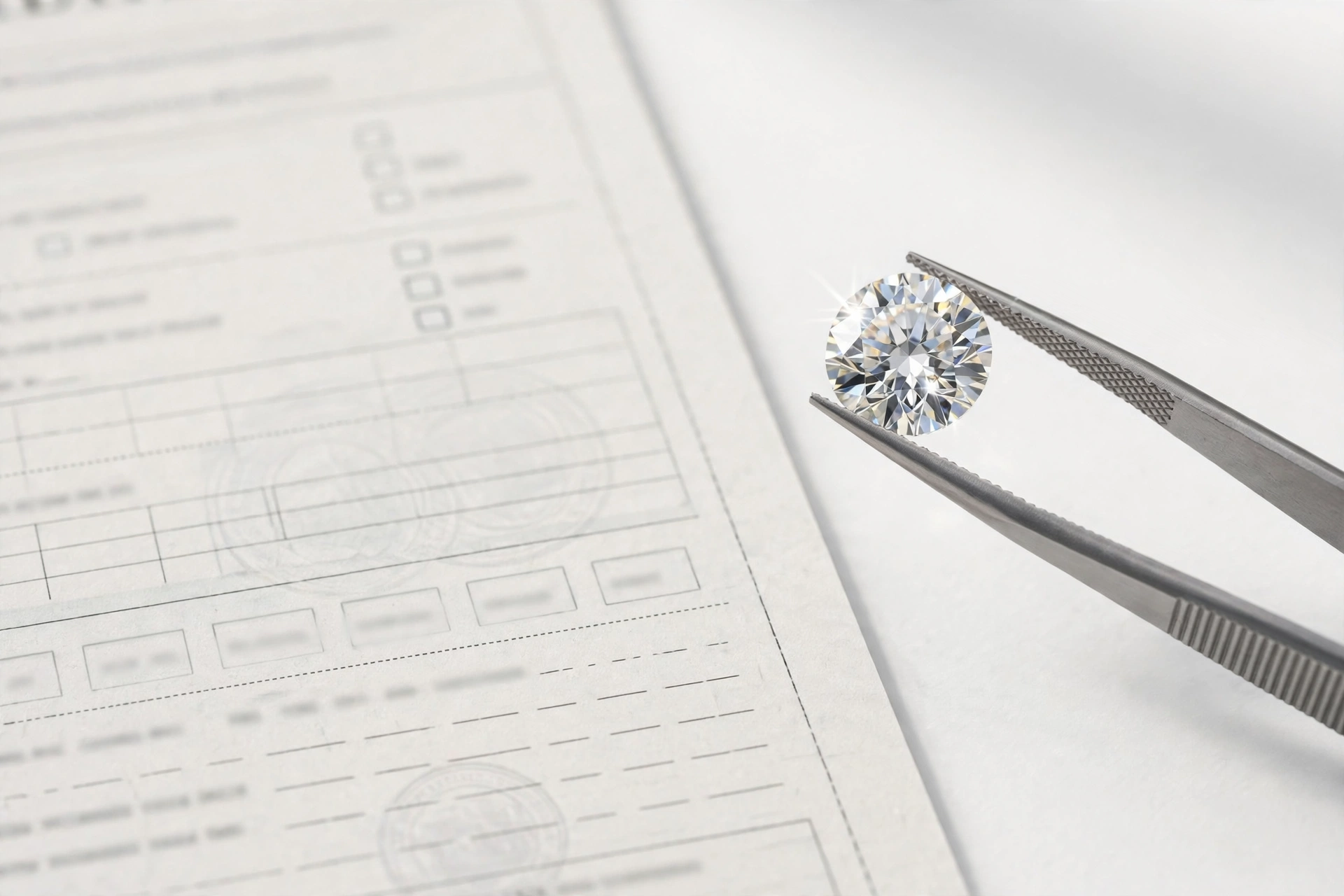
Which should you choose? Honestly, either one serves you well. Pick GIA when maximum grading credibility matters most to you, and accept that you might pay a small premium for it. Pick IGI when you want the widest selection, especially online, where IGI dominates inventory. Never pick a stone with neither, and never let a seller substitute an in-house “certificate” for an independent lab report.
How to Read a Lab Grown Diamond Certificate
Certificates look intimidating, but you only need to understand a handful of sections. Walk through them in this order, and the document starts making sense fast.
Report Number and Date
Every certificate carries a unique report number, usually printed at the top. This number is your stone’s fingerprint, and you will use it to verify the report online and match the laser inscription. Check the date too. A recent report means recent grading, while a very old report might predate the stone’s current condition. The number matters more than anything else on the page.
The 4Cs Section
The report lists carat weight, color grade, clarity grade, and cut grade prominently. The short version stays the same: prioritize Excellent cut, target G to J color and VS2 to SI1 clarity for value, and check millimeter measurements alongside carat weight. The certificate presents these grades plainly, and now you know exactly what each one means for beauty and price.
Measurements and Proportions
The report lists the stone’s dimensions in millimeters, such as 6.48 x 6.52 x 3.98 mm for a round brilliant. These numbers reveal the cut quality that the grade summarizes. Compare length to width for fancy shapes, and check total depth percentage against ideal ranges for rounds. A stone with great grades but odd proportions deserves a closer look, because numbers sometimes hide what grades smooth over.
Growth Method and Comments
This section separates lab grown reports from natural ones, so read it carefully. The report states whether the lab grew the stone by CVD or HPHT, and it notes any post-growth treatments used to improve color or clarity. Common comments include “may include post-growth treatments” or specific treatment disclosures. Treatments are normal and legal, but you deserve to know about them, and the certificate tells you plainly.
Laser Inscription
Reputable labs inscribe the report number on the stone’s girdle with a laser, and the certificate records that inscription. This microscopic engraving connects your physical diamond to its paperwork permanently. You can ask any jeweler to show you the inscription under magnification, and you should do exactly that before you buy. No inscription, or an inscription that does not match the report, means walk away.
How to Verify a Certificate Online
Verification takes two minutes, and you should never skip it. For GIA reports, visit gia.edu/reportcheck, enter the report number, and confirm the grades match the paper in your hand. For IGI reports, visit igi.org/verify and do the same. Both tools are free, and both pull directly from the lab’s database.
What should you check? Confirm the report number exists, confirm the 4Cs match the certificate, and confirm the stone’s description matches what the seller shows you. If the online record differs from the paper certificate, stop the purchase immediately. A mismatch means someone altered the document, mixed up stones, or worse. Legitimate sellers welcome verification, and resistant sellers tell you everything by resisting.
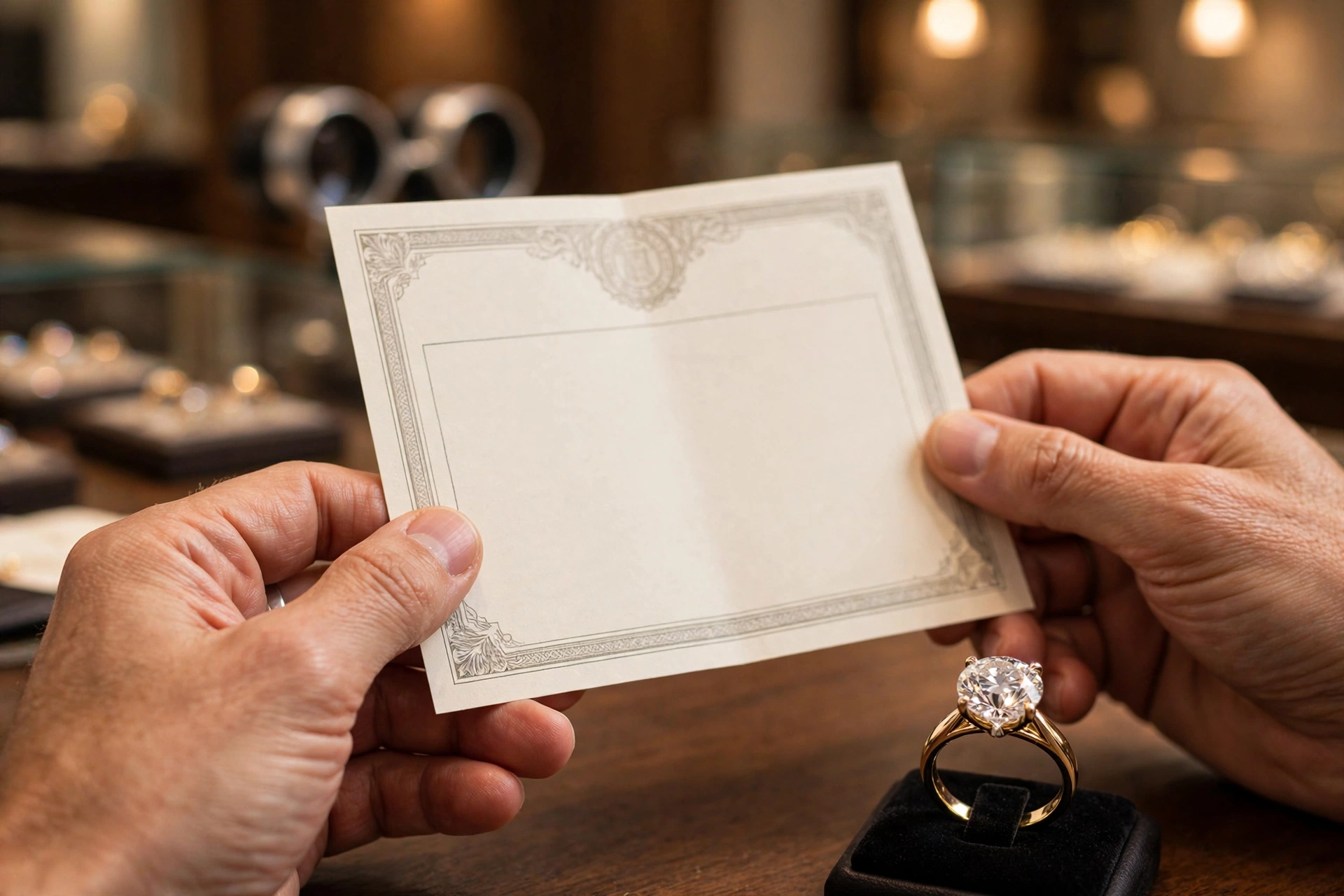
Red Flags: When to Walk Away
Some warning signs should end the conversation on the spot. Memorize this list, and trust it over any sales pitch.
- No certificate at all. The seller asks you to trust their word on grades and origin. You decline.
- In-house certificate instead of IGI or GIA. A seller grading its own stones is a student grading its own exam.
- Report number does not verify online. The database disagrees with the paper, so something is wrong.
- Inscription missing or mismatched. The stone and the paperwork do not belong together.
- Vague grading language. Terms like “premium cut” or “super white” replace actual grades. Real reports use real grades.
- Pressure to decide today. Legitimate stones with real certificates will still exist tomorrow.
My Honest Take
IMO, buyers treat certification as boring paperwork when it is actually their single best protection. FYI, the whole game changes the moment a buyer pulls out a phone and verifies a report number in front of a seller. Honest sellers smile, and shady sellers squirm. That two-minute check does more for you than hours of haggling. Demand IGI or GIA, verify online, match the inscription, and you become nearly scam-proof. The certificate is not paperwork. It is power.
The Bottom Line
IGI and GIA both certify lab grown diamonds reliably, so you should accept either and reject neither. GIA brings stricter grading and bigger prestige, while IGI brings wider availability and online dominance. Read the report number, the 4Cs, the growth method, and the inscription, then verify everything free online before you pay. A certified, verified, inscription-matched stone is a safe stone, and now you know how to confirm all three.
Frequently Asked Questions
Is IGI or GIA better for lab grown diamonds?
Both are reputable. GIA grades more strictly and carries more prestige, while IGI certifies far more lab grown diamonds and dominates online retail. Either certificate protects you well.
How do I verify an IGI certificate?
Visit igi.org/verify, enter the report number from the certificate, and confirm the grades match. The free tool pulls directly from IGI’s database.
How do I verify a GIA certificate?
Visit gia.edu/reportcheck, enter the report number, and confirm the details match your certificate. GIA’s free tool verifies any report instantly.
What does the laser inscription on a diamond mean?
Labs inscribe the certificate’s report number microscopically on the stone’s girdle. The inscription permanently links your physical diamond to its grading report, and jewelers can show it to you under magnification.
Should I buy a lab grown diamond without a certificate?
No. Without an independent IGI or GIA certificate, you have no proof of the stone’s grades, origin, or treatments. Uncertified stones also resell poorly and insure badly.
What growth methods appear on lab grown certificates?
Certificates state CVD (chemical vapor deposition) or HPHT (high pressure high temperature), the two methods labs use to grow diamonds. The report may also disclose post-growth treatments used to improve the stone.
Sources
GIA explains its laboratory grown diamond reports: https://www.gia.edu/lab-grown-diamond. IGI describes its grading services: https://www.igi.org. Verify any GIA report at https://www.gia.edu/reportcheck and any IGI report at https://www.igi.org/verify. Written by the I Love Jewelry Team. Last updated: October 2026.