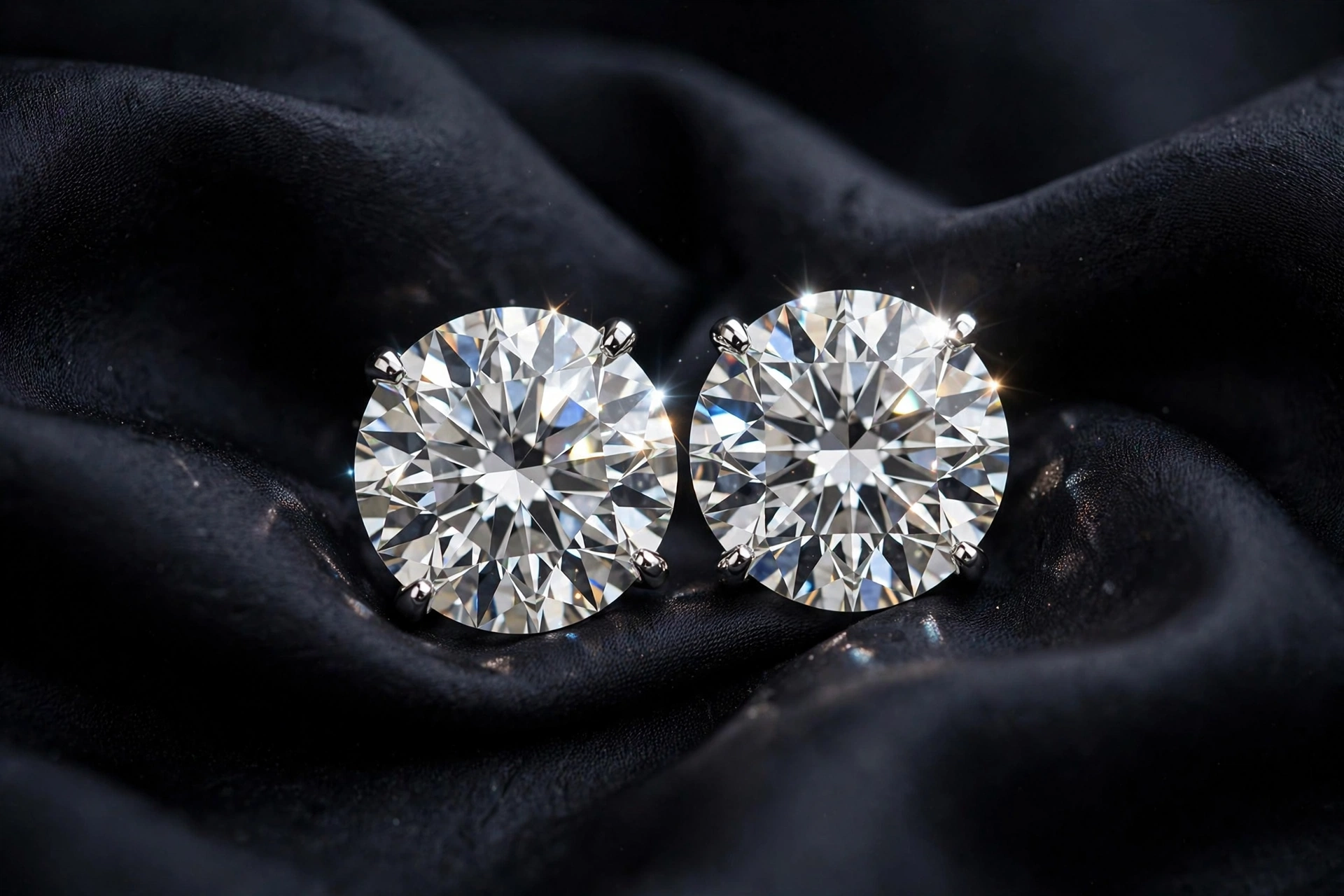
Diamond studs are the white t-shirt of jewellery. They go with everything, they never look wrong, and you will wear them more than anything else you own. I have watched friends agonize over engagement rings for months, then buy studs in fifteen minutes and wear them every single day for a decade. Funny how that works. This guide covers everything: sizes, prices, settings, backings, and the mistakes that cost buyers real money.
Short Answer: Lab grown diamond stud earrings cost roughly $250 to $2,800 depending on size, with 1.00 carat total weight pairs running about $500 to $900 in 14k gold. The most popular size is 1.00 ctw (0.50 carat per ear, about 5.0 mm diameter). Prioritize excellent cut, choose G-H color and VS2-SI1 clarity for the best value, pick screw backs for security, and always buy certified stones.
Key Takeaways
- Total carat weight means both earrings combined. A “1 carat” pair holds 0.50 carat in each ear.
- 1.00 ctw is the sweet spot for most buyers: noticeable, versatile, and reasonably priced in lab grown.
- Cut matters most for studs. An excellent cut makes a smaller diamond outshine a larger dull one.
- Screw backs are the most secure backing style, worth the small premium for larger stones.
- Lab grown studs cost 70 to 85 percent less than natural equivalents with identical appearance.
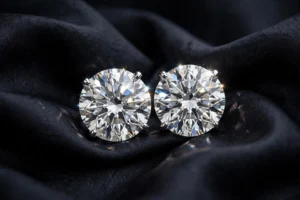
Why Studs Are the Smartest First Diamond Buy
If you are buying your first diamond jewellery piece, start here. Studs work for every occasion, from boardrooms to weddings to grocery runs. They sit close to the ear, so they catch light constantly without snagging on scarves or headphone straps. And unlike a ring that advertises its carat weight to the world, studs sparkle quietly.
Lab grown diamonds make studs an even smarter buy. The price gap between lab grown and natural widens as stones get bigger, so the savings on a 1.00 or 2.00 ctw pair run into the thousands. You get the same carbon crystal, the same hardness, the same sparkle. Your ears cannot tell the difference, and neither can anyone else’s.
Stud Earring Size Chart: Carat vs Millimeters
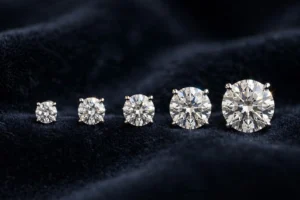
Carat measures weight, not size. But for round brilliant diamonds, weight translates into a predictable diameter. Here is the chart that matters, with measurements per earring.
| Per Earring | Pair Total Weight | Approx. Diameter | The Vibe |
|---|---|---|---|
| 0.25 ct | 0.50 ctw | 4.1 mm | Delicate, minimalist, great second piercing |
| 0.30 ct | 0.60 ctw | 4.3 mm | Subtle everyday sparkle |
| 0.50 ct | 1.00 ctw | 5.0 mm | The classic sweet spot |
| 0.75 ct | 1.50 ctw | 5.8 mm | Confident and eye-catching |
| 1.00 ct | 2.00 ctw | 6.5 mm | Bold, formal-event ready |
| 1.50 ct | 3.00 ctw | 7.4 mm | Statement luxury |
| 2.00 ct | 4.00 ctw | 8.2 mm | Red-carpet drama |
Read listings carefully. “1 carat studs” almost always means 1.00 carat total weight, with 0.50 carat in each ear. If you want a full carat in each ear, search for 2.00 ctw pairs. This is the most common confusion in stud shopping, and sellers count on you not noticing.
Also note that cut quality changes face-up size. A well-cut 0.50 carat diamond can measure a full 5.1 mm, while a deep, poorly cut one of the same weight might measure only 4.8 mm. Same carat, visibly different size. Cut does that.
What Size Should You Actually Buy?
Match the Size to Your Life
- Daily wear warriors: 0.50 to 1.00 ctw. These sit comfortably all day, survive workouts and commutes, and never feel like too much. Most buyers land here and never look back.
- Office to evening: 1.00 to 1.50 ctw. Noticeable in meetings, gorgeous at dinner. This range photographs beautifully without screaming for attention.
- Special occasions and gifts: 1.50 to 3.00 ctw. Milestone birthdays, anniversaries, or the “I have arrived” purchase. Bigger studs need secure backings, which we will cover.
- Second piercings and minimalists: 0.25 to 0.50 ctw. Tiny, perfect, and practically weightless.
Consider Your Earlobe and Style
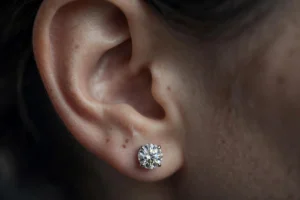
Smaller earlobes suit smaller stones; a 2.00 ctw pair can overwhelm a petite lobe and droop slightly. Larger lobes carry bigger stones gracefully. If you wear your hair up often, studs get full visibility and slightly larger sizes pay off. If long hair covers your ears most days, save your money and go smaller, because nobody sees them anyway.
When in doubt, try this trick: cut paper circles in the diameters from the chart above and hold them to your ears in a mirror. It sounds silly. It works brilliantly.
How Much Do Lab Grown Diamond Studs Cost?
Prices below reflect US online retail listings for 14k gold pairs with G-H color and VS2-SI1 clarity, checked October 2026. Prices vary by seller, exact grades, and metal.
| Pair Total Weight | Per Earring | Typical Price Range (14k Gold) |
|---|---|---|
| 0.50 ctw | 0.25 ct each | $250 to $450 |
| 1.00 ctw | 0.50 ct each | $500 to $900 |
| 1.50 ctw | 0.75 ct each | $800 to $1,300 |
| 2.00 ctw | 1.00 ct each | $1,000 to $1,800 |
| 3.00 ctw | 1.50 ct each | $1,500 to $2,800 |
Platinum settings typically add $200 to $400 over 14k gold. Natural diamond equivalents cost roughly 3 to 5 times these prices, which is why lab grown dominates the stud market now.
Bigger is not always better value. Prices climb faster than visual size because large, clean rough crystals are rarer. The jump from 1.00 to 2.00 ctw roughly doubles the price for a 30 percent increase in diameter. Know this before you stretch your budget.
The 4Cs for Studs: Where to Spend and Where to Save
Studs follow different rules than solitaire rings. Nobody inspects your earlobes with a loupe at dinner. Spend where eyes actually see the difference.
Cut: Spend Here First
Cut is the most important C for studs, by far. It controls brilliance, fire, and how large the stone faces up. Choose Excellent or Very Good cut grades and never compromise here. A superbly cut 0.50 carat stud will out-sparkle a mediocre 0.75 carat one, and everyone in the room will notice.
Color: The Smart Save
Studs sit against skin and hair, not against a white grading background. G-H color looks icy white in real life and costs far less than D-F. You can even go to I color in smaller sizes without anyone noticing. Save the colorless premium for larger stones where tint shows more.
Clarity: The Other Smart Save
VS2 to SI1 clarity is the value sweet spot. Inclusions at these grades are invisible to the naked eye, which is the only eye that matters for earrings. Nobody will ever loupe your earlobes. Paying for VVS clarity in studs buys bragging rights, not visible beauty.
Carat: Buy the Look, Not the Number
Decide your diameter from the size chart, then buy the carat that delivers it. Remember that total weight splits across two ears. And always confirm whether the listing shows per-stone or total weight before you compare prices.
Settings and Backings: The Unsexy Details That Matter
Martini vs Basket Settings
The setting is the little metal cup holding your diamond, and it changes both look and comfort.
- Three-prong martini: The classic. Three slim prongs grip the stone in a cone-shaped cup that sits flush against the ear. It shows maximum diamond, minimum metal, and feels barely there. Most buyers prefer this.
- Four-prong basket: Four prongs hold the stone in a slightly taller basket. It reads a touch more substantial and suits larger stones. Some find it marginally less comfortable for side-sleeping.
Both are excellent. Martini settings flatter smaller stones by keeping the profile low, while basket settings support larger stones with extra security.
Push Back vs Screw Back
This is the part buyers ignore and later regret. The backing keeps a several-hundred-dollar diamond on your ear.
- Push back (friction/butterfly): The standard. You slide it on and friction holds it. Quick, cheap, and fine for smaller studs you wear daily. But friction loosens over time, and push backs are the number one cause of lost studs.
- Screw back: The post is threaded and the back screws on like a tiny nut. Far more secure, slightly slower to put on. Choose screw backs for anything 1.00 ctw and up, or for any pair you would cry over losing.
- Lever back and la pousette: Premium locking mechanisms, mostly found on high-end pairs. Wonderful security, higher cost.
IMO, the backing upgrade is the cheapest insurance in all of jewellery. A $30 difference in backing protects a $900 pair. Do the math.
Metal Choices
14k gold suits almost everyone: durable, affordable, and available in yellow, white, and rose. 18k gold feels more luxurious and suits sensitive skin slightly better, but it scratches easier and costs more. Platinum is the premium pick: dense, hypoallergenic, and it holds stones with unmatched security, but it adds real money to the price.
For white metals, note that white gold needs rhodium replating every year or two to stay bright white. Platinum never needs plating but develops a soft patina. Neither is wrong. Pick the maintenance level you will actually keep up with.
7 Mistakes Stud Buyers Make
- Confusing total weight with per-ear weight. Always confirm whether “1 carat” means per stud or per pair before comparing prices.
- Ignoring cut quality. A dull, deep-cut diamond wastes every dollar you spent on carat weight.
- Overpaying for clarity nobody sees. VVS studs look identical to VS2 studs on the ear. Save the money.
- Skipping screw backs on large studs. Push backs loosen. Gravity wins eventually.
- Buying uncertified stones. Without an IGI or GIA report, you are trusting the seller’s word on every grade.
- Forgetting the metal matters too. A beautiful diamond in flimsy, thin-pronged gold is a repair bill waiting to happen.
- Never checking the return policy. Studs look different on your ears than on a screen. Buy from sellers with real return windows.
Caring for Your Studs
Studs collect lotion, shampoo, and sunscreen faster than any other jewellery because they live in the splash zone. Clean them every two to four weeks with warm water, mild dish soap, and a soft toothbrush. Check the prongs monthly by gently wiggling each stone; any movement means a jeweler visit. For the full routine, see our guide on how to clean lab grown diamond jewellery at home.
Store studs with their backs on, in separate compartments. Diamonds scratch everything, including each other, and a loose backing in a jewellery box is a tragedy in slow motion.
My Honest Take
FYI, studs are the one jewellery purchase I never hear anyone regret. Rings get resized, necklaces get tangled and forgotten, bracelets get caught on things. But studs? People put them in and basically never take them out. They become part of your face.
So buy the best cut you can afford, secure them properly, and stop second-guessing the size. In six months you will not remember whether you bought 1.00 or 1.25 ctw. You will only remember that they sparkle every time you catch your reflection.
The Bottom Line
Lab grown diamond stud earrings deliver the best value in all of fine jewellery: real diamonds, everyday wearability, and prices 70 to 85 percent below natural. Use the size chart to pick your diameter, remember that total weight splits across both ears, prioritize excellent cut with G-H color and VS2-SI1 clarity, and secure them with screw backs. Buy certified, care for them simply, and wear them everywhere.
Frequently Asked Questions
What is the most popular size for diamond stud earrings?
1.00 carat total weight (0.50 carat per ear, about 5.0 mm diameter) is the most popular size. It balances visibility, comfort, and price, and it suits both daily wear and formal occasions.
Does 1 carat mean per earring or per pair?
In almost all listings, “1 carat studs” means 1.00 carat total weight, with 0.50 carat in each earring. If you want one full carat per ear, look for 2.00 ctw pairs. Always confirm before buying.
Are screw backs really worth it?
Yes, especially for studs 1.00 ctw and larger. Screw backs thread onto the post and resist loosening far better than friction push backs. They cost only slightly more and dramatically reduce the risk of losing a stone.
What is the best color and clarity for stud earrings?
G-H color and VS2-SI1 clarity hit the value sweet spot. These grades look white and eye-clean in real-world wear while costing far less than higher grades. Spend the savings on better cut quality instead.
Can I wear diamond studs every day?
Absolutely. Studs are designed for daily wear. Choose 0.50 to 1.00 ctw for maximum comfort, secure backings, and a low-profile setting like the martini style. Clean them every few weeks to keep the sparkle.
How do I know my lab grown studs are real diamonds?
Buy certified stones with IGI or GIA grading reports, which state the origin and grades explicitly. Lab grown diamonds are real diamonds and pass standard diamond testers, so the certificate is your proof, not a home test.
Sources
GIA publishes diamond grading standards and jewellery buying guidance: https://www.gia.edu. IGI grades lab grown diamonds and certifies finished jewellery: https://www.igi.org. The FTC’s Jewelry Guides govern how sellers describe diamond jewellery: https://www.ftc.gov/legal-library/browse/rules/jewelry-precious-metals-pewter-jewelry-guides. Written by the I Love Jewelry Team. Last updated: October 2026.