In 1987, Chris Evert’s diamond bracelet snapped mid-match at the US Open, and officials paused the game while she retrieved her diamonds. Jewelers started calling the style a “tennis bracelet” after that moment, and the name stuck forever. Today you can own that same timeless look with lab grown diamonds for a fraction of the old price. This guide covers prices, styles, and exactly how to choose the perfect one.
Short Answer: A lab grown diamond tennis bracelet costs $400 to $3,500 in 2027 depending on total carat weight, with 2 to 3 carats total hitting the sweet spot for most buyers at $700 to $2,000. Choose a classic 4-prong setting, a secure box clasp with a safety latch, G to J color and VS2 to SI1 clarity stones, and a 7-inch length for average wrists. Lab grown gives you the same look as natural for 70% to 85% less.
Key Takeaways
- Lab grown tennis bracelets cost $400 to $3,500 depending on total carat weight, metal, and design.
- 2 to 3 carats total weight hits the sweet spot for presence, sparkle, and value for most buyers.
- Pick a box clasp with a safety latch. Clasps fail more often than stones fall out, so security matters most.
- Match your 4Cs knowledge here: G to J color and VS2 to SI1 clarity deliver the best value per stone.
- Natural tennis bracelets cost 5x to 10x more for the identical look, which makes lab grown the smart buy.
What Is a Tennis Bracelet?
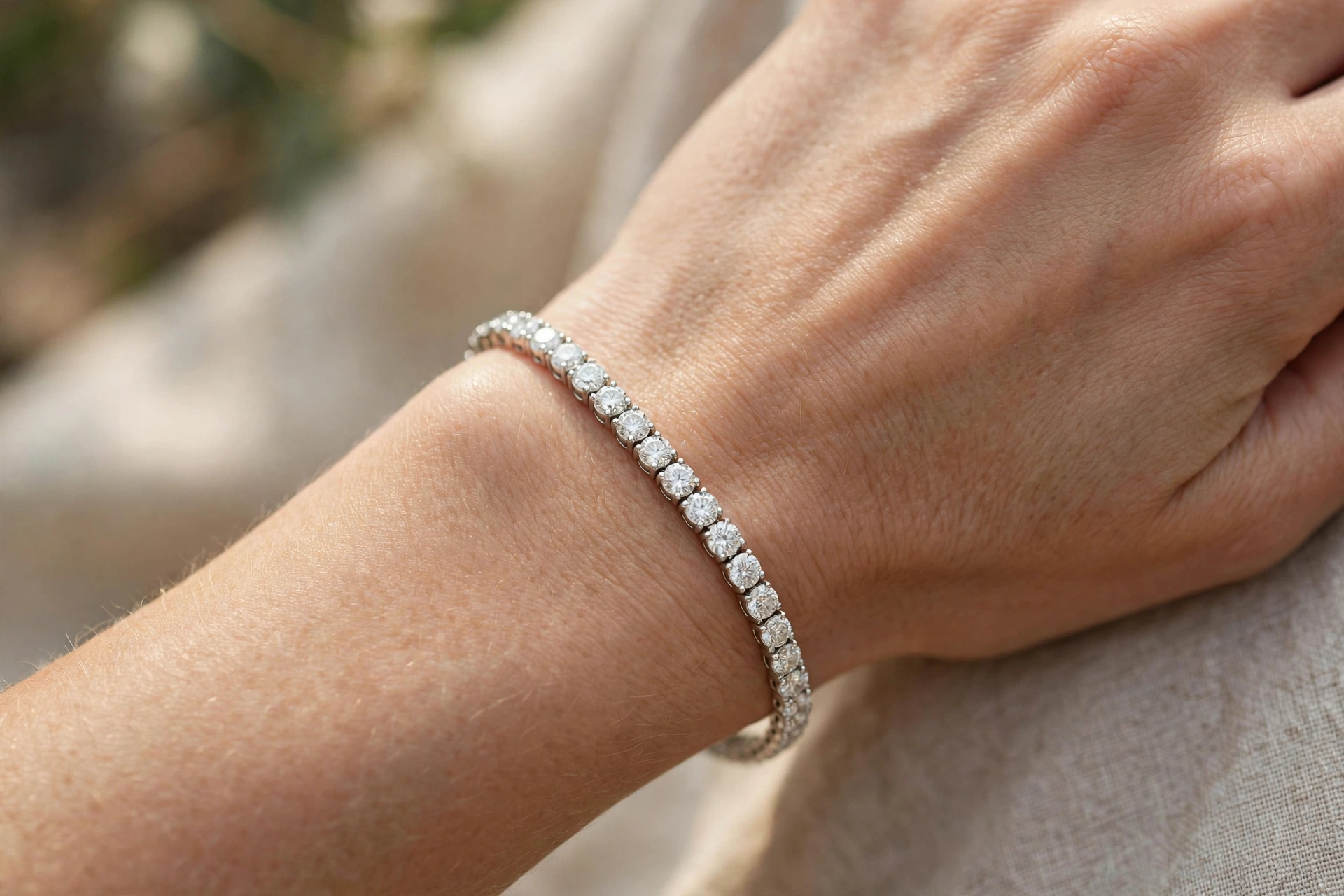
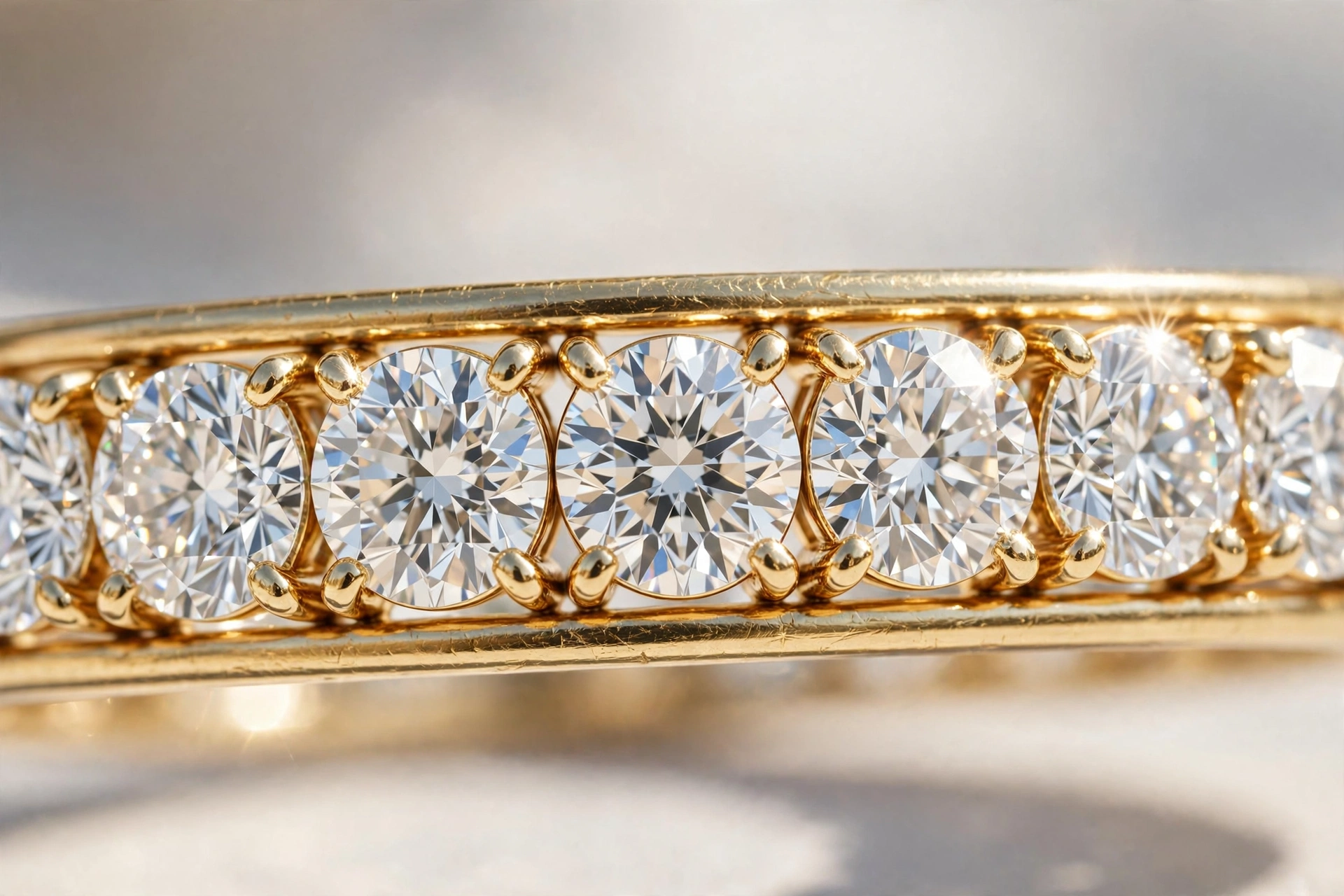
A tennis bracelet lines up individual diamonds in a flexible row, usually set in gold or platinum, and it fastens with a secure clasp. Each stone sits in its own setting, typically a 3-prong or 4-prong mount, and the articulated links let the bracelet drape elegantly around your wrist. The design shows off diamonds from every angle, and light hits each stone as your wrist moves. You get continuous sparkle with zero fuss.
The style works for everything from weddings to Tuesday afternoons, which explains its permanent popularity. It layers beautifully with watches and bangles, and it never looks overdressed or underdressed. A tennis bracelet might be the most versatile piece of diamond jewellery you can own, and lab grown pricing finally puts it within reach.
How Much Does a Lab Grown Diamond Tennis Bracelet Cost?
Total carat weight drives the price more than anything else, because you are essentially buying dozens of small diamonds plus craftsmanship. Here is what 2027 pricing looks like across popular sizes.
| Total Carat Weight | Lab Grown Price (2027) | Natural Equivalent |
|---|---|---|
| 1 carat total | $400 to $800 | $2,500 to $5,000 |
| 2 carats total | $700 to $1,400 | $5,000 to $10,000 |
| 3 carats total | $1,000 to $2,000 | $8,000 to $15,000 |
| 5 carats total | $1,800 to $3,500 | $15,000 to $30,000 |
| 7 carats total | $2,500 to $5,000 | $25,000 to $50,000 |
Price ranges based on US online retail listings for lab grown diamond bracelets in 14k gold, checked October 2026. Prices vary by seller, diamond quality, metal choice, and design.
Notice the pattern: lab grown diamonds cost a small fraction of natural at every size. A 3-carat lab grown bracelet at $1,500 delivers the same wrist presence as a $12,000 natural one. That gap funds the rest of your jewellery wishlist, or a very nice vacation. The math is not subtle here.
Metal choice moves the price too. 14k gold keeps costs down and wears beautifully for daily use. 18k gold feels richer and suits buyers who want maximum luxury. Platinum costs the most and offers unmatched durability and a naturally white finish. You should match the metal to your other jewellery so everything coordinates.
Tennis Bracelet Styles
Classic never goes out of fashion, but you have real choices within the tennis bracelet family. Each style changes the look more than you might expect.
Classic Prong Setting
The traditional tennis bracelet uses 3-prong or 4-prong settings for each stone, and this design maximizes light exposure. 4-prong settings hold stones most securely, while 3-prong settings show slightly more of each diamond. You should default to 4-prong for daily wear, because security beats a marginal sparkle gain. This is the Chris Evert original, and it remains the most popular choice for good reason.
Bezel Setting
Bezel settings wrap a thin metal rim around each diamond, and this style suits active lifestyles perfectly. The metal rim protects stone edges from chips and gives the bracelet a sleek, modern look. You sacrifice a little light performance compared to prongs, but you gain serious durability. Pick bezel if you never take your jewellery off.
Graduated and Alternative Styles
Graduated bracelets use larger stones in the center that taper toward the clasp, and this design flatters the wrist beautifully. Some modern styles mix diamond shapes or add milgrain detailing for vintage character. These variations cost more due to complex craftsmanship, but they stand out from the classic line. You should try them on in person, because photos never capture how alternative styles sit on the wrist.
How to Choose: The Details That Matter
Beyond style and carat weight, several details separate great bracelets from disappointing ones. Check each one before you buy.
Diamond Quality
Apply your 4Cs knowledge across dozens of small stones. G to H color and VS2 to SI1 clarity hit the value sweet spot, just like with larger stones. Consistency matters more than individual grades: all stones should match in color and clarity so no single diamond stands out. Reputable sellers calibrate their melee diamonds carefully, and you should ask about matching standards.
Length and Fit
7 inches suits most women’s wrists as the standard length, while 8 inches fits larger wrists or looser preferences. The bracelet should slide over your hand comfortably but not dangle loosely enough to snag. Measure your wrist with a soft tape and add half an inch for comfortable movement. A bracelet that fits right stays put and feels like part of you.
The Clasp: Your Most Important Decision
Clasps fail more often than settings do, so treat this choice seriously. A box clasp with a figure-8 safety latch is the gold standard, because the secondary latch catches the bracelet if the main clasp opens. Hidden clasps look sleeker but offer less security. Tug test every clasp before buying, and reject anything that feels flimsy. Your diamonds depend entirely on this tiny mechanism.
Lab Grown vs Natural Tennis Bracelet
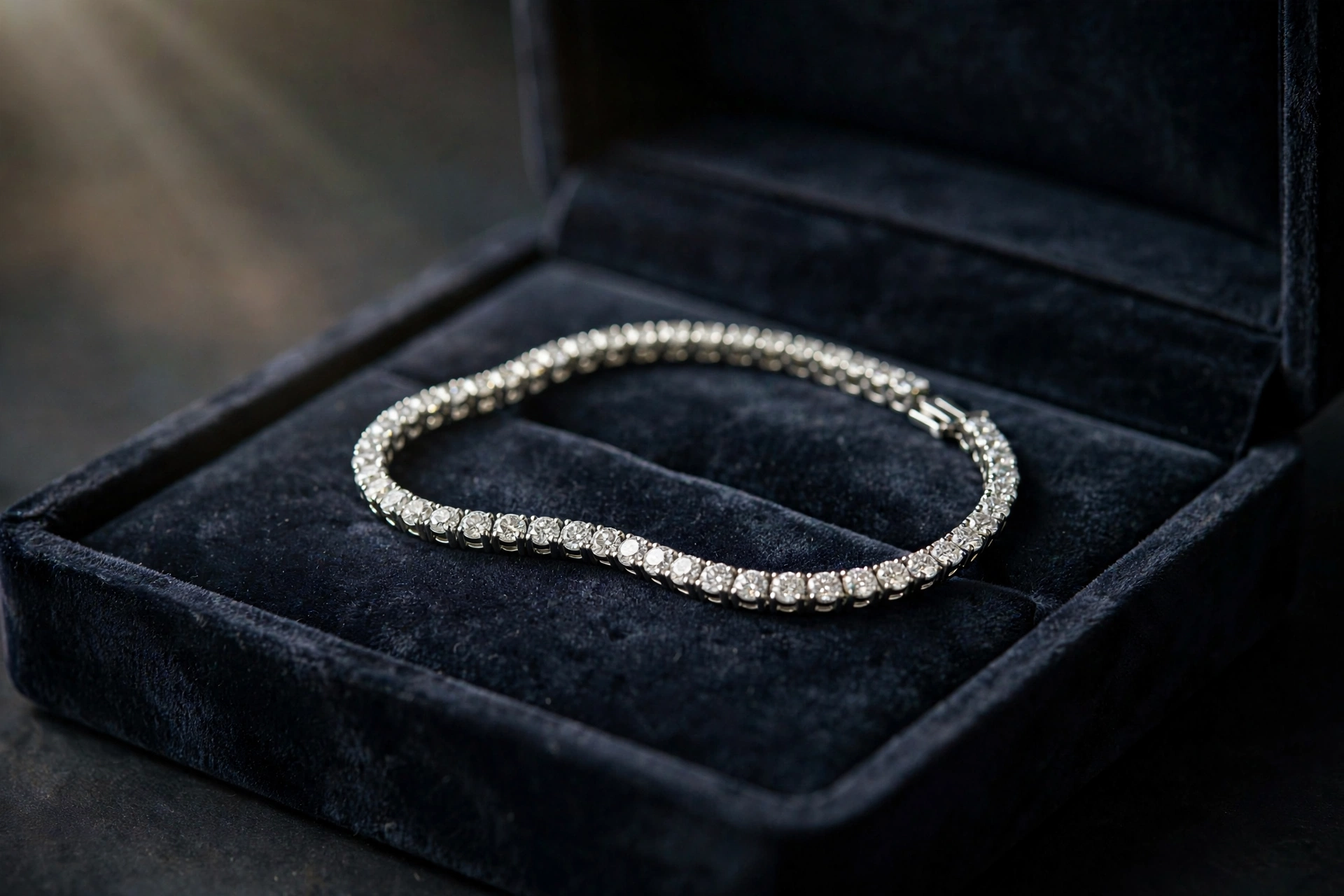
The comparison is almost unfair at this point. A natural 3-carat tennis bracelet costs $8,000 to $15,000, while the lab grown version costs $1,000 to $2,000. Both use real diamonds, both sparkle identically, and both last forever. The natural version buys you a story about geology, and the lab grown version buys you ten thousand dollars of freedom.
Does anyone notice the difference? No. Tennis bracelets use small stones where origin differences are completely invisible, even to professionals without lab equipment. IMO, the tennis bracelet is the single jewellery category where lab grown makes the most overwhelming sense. You get maximum visible diamonds per dollar, period.
Caring for Your Tennis Bracelet
Tennis bracelets need slightly more attention than solitaires because they have dozens of settings and one critical clasp. Clean yours every two to three weeks with warm water, mild dish soap, and a soft toothbrush, paying attention to the galleries under each stone. Rinse thoroughly and dry with a lint-free cloth.
Check the clasp monthly by opening and closing it several times and confirming the safety latch engages firmly. Have a jeweller inspect all prongs annually, because a loose stone in a bracelet can fall out unnoticed during daily wear. Store the bracelet flat in its own compartment, never tangled with other pieces. These small habits keep your bracelet perfect for decades.
My Honest Take
FYI, the tennis bracelet might be my favorite argument for lab grown diamonds, because the value proposition is just absurd. You are buying forty or fifty individual diamonds, and the lab grown version costs less than a single carat of natural. The wrist presence is identical, the durability is identical, and the compliments are identical. Anyone who tells you to pay $12,000 for the natural version is selling you a story, not a superior product. Buy the lab grown bracelet, wear it daily, and spend the savings on something that actually improves your life.
The Bottom Line
Lab grown diamond tennis bracelets cost $400 to $3,500 in 2027, with 2 to 3 carats total offering the best balance of presence and value. Choose a 4-prong setting, a box clasp with a safety latch, matched G to J color and VS2 to SI1 clarity stones, and the right length for your wrist. You get the timeless Chris Evert look for a fraction of natural prices. Measure your wrist, pick your carat weight, and enjoy decades of sparkle.
Frequently Asked Questions
How much does a lab grown diamond tennis bracelet cost?
Prices range from $400 for 1 carat total to $5,000 for 7 carats total in 2027. Most buyers spend $700 to $2,000 for 2 to 3 carats total weight, which offers the best balance of presence and value.
What is the best clasp for a tennis bracelet?
A box clasp with a figure-8 safety latch is the most secure option. The secondary latch catches the bracelet if the main clasp opens accidentally. Always test the clasp strength before buying.
What length tennis bracelet should I buy?
7 inches is the standard length for most women’s wrists. Measure your wrist with a soft tape measure and add half an inch for comfortable movement.
Are lab grown diamond tennis bracelets durable?
Yes. Lab grown diamonds have the same 10/10 Mohs hardness as natural diamonds. With 4-prong settings and a secure clasp, tennis bracelets handle daily wear beautifully for decades.
How do I clean a diamond tennis bracelet?
Soak it in warm water with mild dish soap for 20 minutes, scrub gently around each stone with a soft toothbrush, rinse thoroughly, and dry with a lint-free cloth. Clean every two to three weeks.
Is a 2 carat or 3 carat tennis bracelet better?
Both look great. 2 carats total offers elegant everyday sparkle at $700 to $1,400, while 3 carats total makes a bolder statement at $1,000 to $2,000. Your wrist size and budget should decide.
Sources
GIA explains diamond quality factors that apply to bracelet stones: https://www.gia.edu/4cs. IGI certifies lab grown diamonds used in fine jewellery: https://www.igi.org. The FTC’s Jewelry Guides govern diamond advertising: https://www.ftc.gov/legal-library/browse/rules/jewelry-precious-metals-pewter-jewelry-guides. Written by the I Love Jewelry Team. Last updated: October 2026.