A jeweler slides two certificates across the counter, and both look like alphabet soup. Excellent cut, G colour, VS2 clarity, 1.2 carats… what does any of it actually mean for how the diamond looks? You deserve plain answers, not a gemology lecture. This guide translates the 4Cs into real buying decisions, and you will walk away knowing exactly where to spend and where to save.
Short Answer: Prioritize cut first because it creates the sparkle, then pick G to J colour and VS2 to SI1 clarity for the best value, and choose carat last based on your budget. An Excellent cut 1-carat G VS2 lab grown diamond beats a poorly cut 1.5-carat D VVS1 stone on beauty every time. The 4Cs work as a team, but cut captains that team.
Key Takeaways
- Cut has the biggest impact on sparkle. Always choose Excellent or Ideal cut before upgrading anything else.
- G to J colour looks white to most eyes and costs far less than D to F colourless grades.
- VS2 to SI1 clarity offers the best value. Eye-clean beats flawless on paper at a fraction of the price.
- Carat measures weight, not size. A well-cut 0.9-carat stone can outshine a deep 1-carat stone.
- Buy just under “magic sizes” like 1.0 and 1.5 carats to dodge the price jumps at round numbers.
Cut: The Sparkle Maker
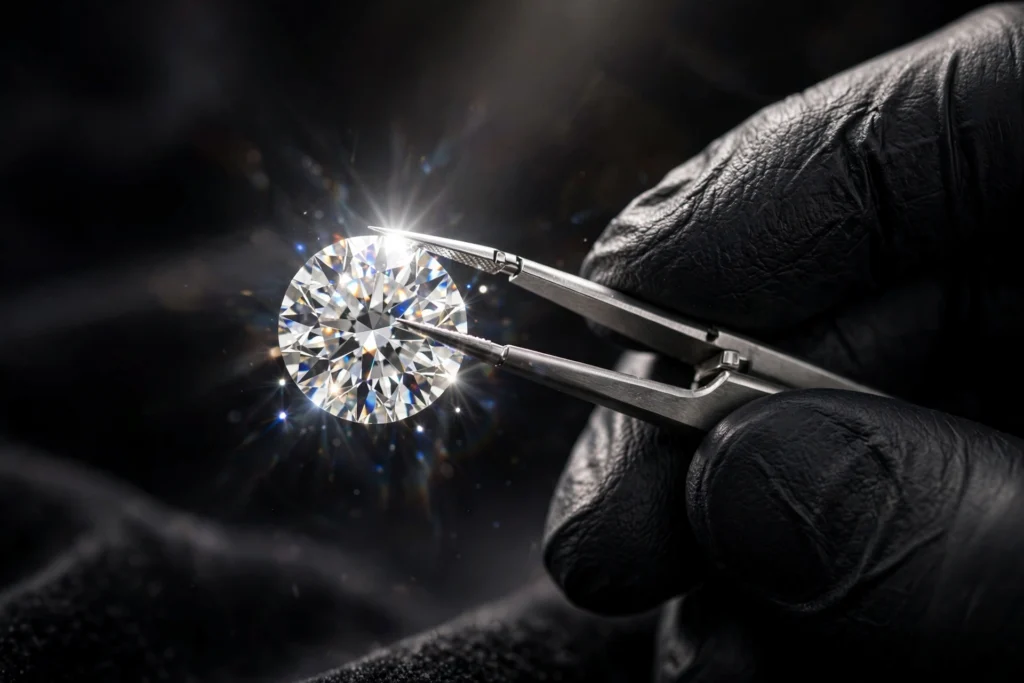
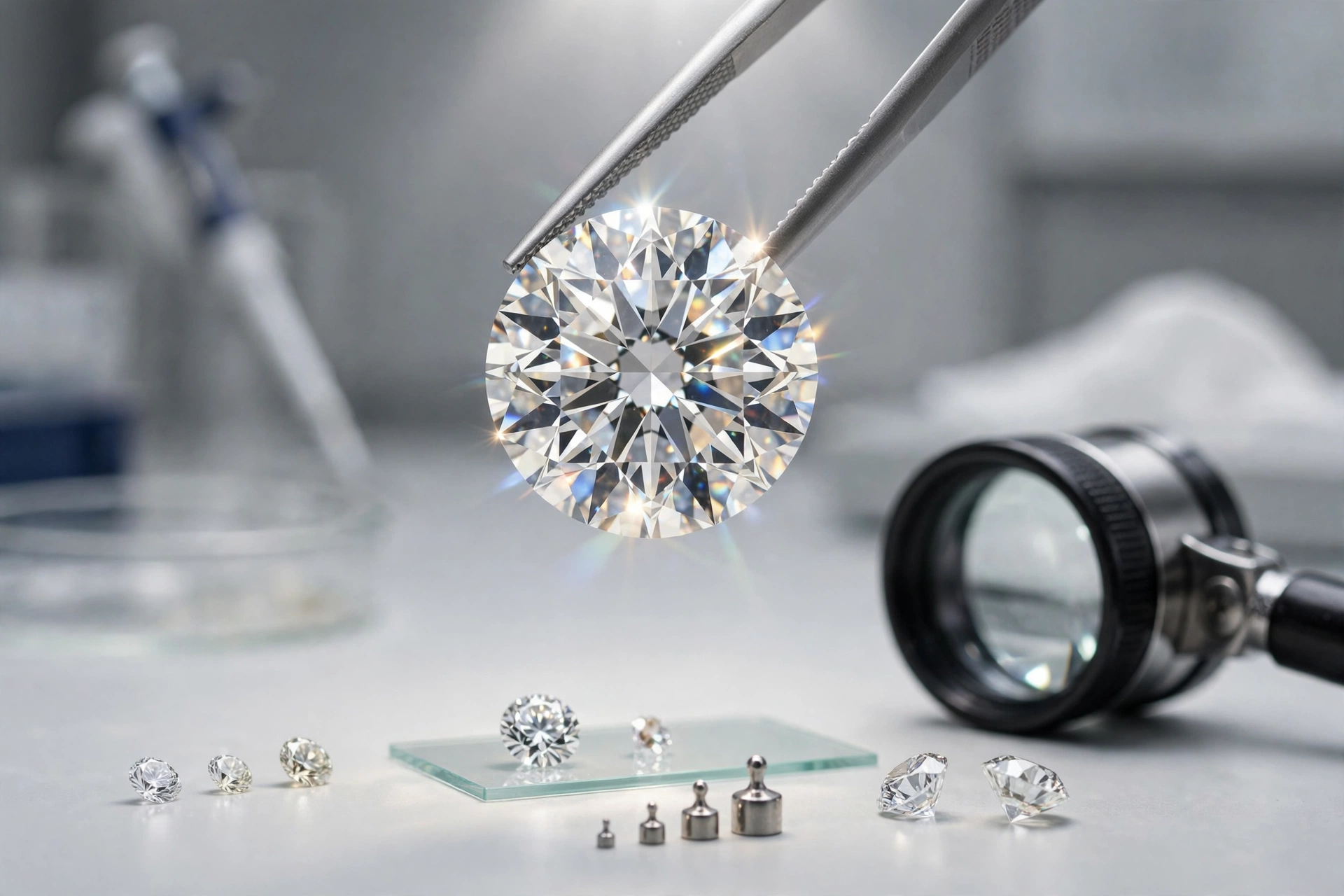
Cut decides how your diamond handles light, and light handling is the entire show. Cutters shape each facet at precise angles, and those angles determine whether light bounces back to your eye or leaks out the bottom. An Excellent cut returns maximum brilliance, fire, and scintillation, while a Fair cut looks dull even with perfect colour and clarity. You can buy the whitest, cleanest stone on earth, and a bad cut still makes it look lifeless.
Grading labs rank cut from Excellent (or Ideal) down through Very Good, Good, Fair, and Poor. You should treat Excellent as non-negotiable for round brilliants, because the price gap between Excellent and Very Good is small compared to the visible difference. For fancy shapes like oval and cushion, labs grade polish and symmetry instead of a single cut grade, so you should evaluate those stones by eye and video. Ever wondered why two same-size diamonds look totally different? Cut quality explains nearly all of it.
How to Judge Cut Without a Lab Report
You do not need a gemology degree to spot a good cut. Look for even, symmetrical sparkle across the whole stone with no dark or dead patches. Tilt the stone and watch the light play stay lively from every angle. Compare stones side by side in daylight, because your eyes detect cut quality faster than any certificate explains it.
Colour: The White Scale
Colour grades run from D (totally colourless) to Z (visibly tinted), and most buyers shop somewhere in the D to J range. D to F stones look icy white and command premium prices for that perfection. G to J stones look white to the naked eye in normal viewing, especially once set in a ring, and they cost dramatically less. K and below show warmth that some buyers love in vintage styles but most buyers avoid in solitaires.
Here is the practical truth: nobody admires your ring and thinks about its colour grade. Mounted in yellow gold, even an H or I stone looks perfectly white because the warm metal masks faint tint. Set in platinum or white gold, you might notice warmth at J and below in larger stones. You should match your colour choice to the metal and the stone size, not to some abstract pursuit of D perfection.
The Sweet Spot for Colour
G to H hits the sweet spot for most buyers, delivering a white appearance at a sensible price. You save real money stepping down from F to G, and the visual difference is essentially zero. You can stretch to I or J in yellow gold settings or smaller stones without regret. Reserve D to F for buyers who simply want the best and accept the premium happily.

Clarity: The Flaw Map
Clarity grades count the tiny inclusions (internal flaws) and blemishes (surface marks) in your stone. The scale runs FL (flawless), IF (internally flawless), VVS1/VVS2, VS1/VS2, SI1/SI2, and down into I1/I2/I3 (included). Each step up costs more, but your naked eye cannot see most of these differences. A VS2 stone and a VVS1 stone look identical without 10x magnification, yet the VVS1 costs far more.
Lab grown diamonds often achieve high clarity grades because labs control the growth environment tightly. That sounds great, but it tempts buyers to overpay for grades they cannot appreciate. You should chase “eye-clean” instead of a grade label: if you cannot see flaws with your naked eye at a normal viewing distance, the clarity grade has done its job. An eye-clean SI1 delivers the same real-world beauty as a VVS2 at a much kinder price.
The Sweet Spot for Clarity
VS2 to SI1 offers the best value for most buyers. VS2 stones look clean in nearly all cases, and carefully selected SI1 stones look clean too. You should always verify SI1 stones with magnified video, because inclusions vary in visibility even within the same grade. Skip FL to VVS unless you collect perfection as a hobby, because you pay dearly for differences only a microscope reveals.
Carat: The Weight Game
Carat measures weight, not size, and that distinction trips up nearly every buyer. One carat equals 0.2 grams, and a well-proportioned 0.9-carat stone can face up larger than a deep, poorly cut 1-carat stone. Millimeter dimensions tell you more about visible size than carat weight does, so you should always check the length-by-width numbers on the certificate.
Carat also drives price in jumps, not smooth lines. Stones hit “magic sizes” at 0.5, 1.0, 1.5, and 2.0 carats, and prices leap at each threshold because demand concentrates there. A 0.9-carat stone costs far less than a 1.0-carat stone with nearly identical face-up size. Smart buyers shop just under magic sizes and pocket the savings, and nobody’s eye detects the missing tenth of a carat.
Size vs. Beauty: The Real Tradeoff
Bigger impresses at first glance, but better-cut captivates forever. A 1-carat Excellent cut stone outshines a 1.3-carat Good cut stone in every lighting condition, and guests notice sparkle long after they forget size. You should buy the best cut your budget allows first, then take whatever carat remains. A smaller stone that dances with light beats a bigger stone that sits dull.

The 4Cs Priority Order
When budget forces choices, and it always does, follow this order. It reflects what your eyes actually perceive, not what certificates emphasize.
| Priority | C | What to Choose | Why |
|---|---|---|---|
| 1st | Cut | Excellent / Ideal | Creates all the sparkle you see |
| 2nd | Colour | G to J | Looks white, saves serious money |
| 3rd | Clarity | VS2 to SI1 | Eye-clean matches flawless visually |
| 4th | Carat | Fit remaining budget | Size impresses, but cut wows |
This order surprises buyers who assume carat comes first. Think about it: you look at your ring a thousand times, and cut determines how it looks every single time. Colour and clarity determine how it looks under scrutiny, which happens rarely. Carat determines the number people ask about once. You should spend where your eyes live.
4Cs Buying Mistakes to Avoid
Even informed buyers stumble on these traps, so learn them here for free instead of paying tuition at the counter.
- Chasing D colour with a weak budget. You sacrifice cut or size for a colour difference nobody sees, and the ring looks worse overall.
- Paying for VVS clarity you cannot see. Your eyes cannot distinguish VVS2 from VS2, but your wallet definitely feels the difference.
- Ignoring cut grade to afford more carat. A big dull stone disappoints daily, while a smaller brilliant stone delights daily.
- Buying exactly 1.0 carats. You pay the magic-size premium for a number on paper. A 0.9-carat stone looks the same and costs less.
- Trusting the certificate alone. Certificates describe the stone, but your eyes judge it. Always view videos or see the stone in person.
- Forgetting the setting’s effect. Yellow gold warms a stone’s appearance, white metals cool it, and halos make centers look larger.
My Honest Take
IMO, the 4Cs exist to help you, not to intimidate you, though jewelers sometimes use the jargon as a smokescreen. FYI, the entire game reduces to one sentence: buy the best cut you can afford, keep colour and clarity in the value zones, and let carat fall where your budget lands. Buyers who follow that rule end up with stunning rings at every price point, while buyers who chase paper grades end up overpaying for invisible perfection. Trust your eyes, respect your budget, and the 4Cs become tools instead of traps.
The Bottom Line
Cut creates the sparkle, so you choose Excellent first and never compromise there. G to J colour and VS2 to SI1 clarity deliver white, eye-clean beauty for far less than premium grades. Carat comes last: you check millimeter dimensions, shop just under magic sizes, and take the size your budget allows. Follow that priority order and you will buy a lab grown diamond that looks far more expensive than it was, and you will shop for lab grown diamond engagement rings with total confidence.
Frequently Asked Questions
What is the most important of the 4Cs?
Cut matters most because it determines how the diamond handles light. An Excellent cut makes a stone sparkle brilliantly, while a poor cut makes even a flawless stone look dull.
What is the best colour grade for value?
G to H offers the best balance of white appearance and price. These grades look colourless to the naked eye, especially once set, while costing far less than D to F grades.
What clarity grade should I choose?
VS2 to SI1 gives you the best value. These grades look eye-clean in normal viewing, meaning you see no flaws without magnification, at a fraction of VVS prices.
Does carat measure the size of a diamond?
Carat measures weight, not visible size. A well-cut 0.9-carat stone can face up larger than a deep 1-carat stone, so you should check millimeter dimensions alongside carat weight.
Should I buy a 1.0 carat or 0.9 carat diamond?
Buy 0.9 carats if value matters to you. Prices jump at the 1.0 “magic size” threshold, while the visual difference between 0.9 and 1.0 carats is essentially invisible.
Do the 4Cs apply the same to lab grown diamonds?
Yes. GIA and IGI grade lab grown diamonds with the exact same 4Cs scales they use for natural diamonds, so every grade means the same thing regardless of origin.
Sources
GIA created the 4Cs system and publishes detailed grading guides: https://www.gia.edu/4cs. IGI grades lab grown diamonds on the same 4Cs scales: https://www.igi.org. The FTC’s Jewelry Guides govern diamond advertising: https://www.ftc.gov/legal-library/browse/rules/jewelry-precious-metals-pewter-jewelry-guides. Written by the I Love Jewelry Team. Last updated: October 2026.