Someone told you lab grown diamonds are fake, and now you wonder if you almost bought a scam. I have heard this question a hundred times, and I have watched smart buyers freeze because no one gave them a straight answer. This guide answers the 7 questions everyone asks, and it gives you honest, no-fluff answers you can trust. You will finish knowing exactly what lab grown diamonds are, and whether they deserve your money.
Short Answer: Yes, lab grown diamonds are real diamonds, and yes, they are worth it for most buyers. Labs grow them with the same chemical makeup, hardness, and sparkle as natural diamonds, and gemologists classify them as real diamonds. You pay 70% to 85% less than natural, and you get more size and sparkle for your money.

Key Takeaways
- Lab grown diamonds are real diamonds. Both use pure crystallized carbon and score 10 on the Mohs hardness scale.
- You cannot tell them apart by eye. Even jewelers need lab equipment to tell them apart.
- They cost 70% to 85% less than natural diamonds, and a 1-carat lab grown diamond costs $800 to $1,800 in 2027.
- Natural diamonds hold resale value better, but neither stone works as an investment.
- Buy lab grown for value and size, and buy natural for rarity and tradition.
Question 1: Are Lab Grown Diamonds Real Diamonds?
Yes. Labs grow real diamonds, and gemologists classify them as real diamonds — not fakes, not imitations, not cubic zirconia. A lab grown diamond shares the exact chemical makeup of a natural diamond, and both stones use pure crystallized carbon. GIA and IGI grade lab grown diamonds with the same 4Cs, and the FTC requires sellers to call them real diamonds. You own a genuine diamond when you buy lab grown, and no honest jeweler will tell you otherwise.
I once watched a friend’s fiancé squint at her lab grown ring and whisper, “Is it real?” She laughed, and she showed him the IGI certificate. That certificate ended the debate in ten seconds, and it will end yours too. You should always demand that paperwork, and you should never let anyone shame your choice.
- Real: Same carbon crystal, same hardness, same sparkle.
- Certified: GIA and IGI grade them like natural diamonds.
- Legal: FTC rules call them real diamonds, not synthetic fakes.
Question 2: How Are Lab Grown Diamonds Made?
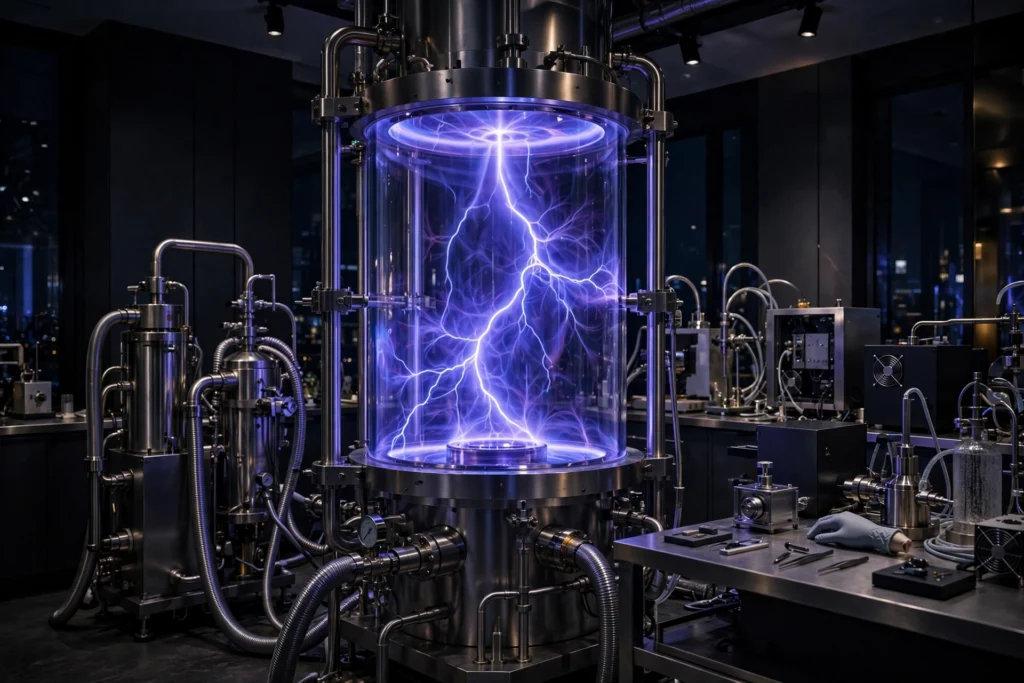
Labs make lab grown diamonds with two methods, and both methods copy how Earth makes natural diamonds. HPHT presses carbon under intense heat and pressure, and CVD grows a diamond layer by layer from carbon-rich gas. Scientists seed the process with a tiny diamond slice, and the crystal grows around that seed over several weeks. You get a real diamond at the end, and no one sprinkles plastic or glass into the mix.
HPHT works best for smaller stones and certain colors, and CVD works best for larger, high-clarity stones. Labs control the environment tightly, and that control explains why lab grown diamonds often look cleaner than natural ones. You pay for science and precision, and you skip the billion-year wait.
Question 3: Can You Tell the Difference Between Lab Grown and Natural Diamonds?
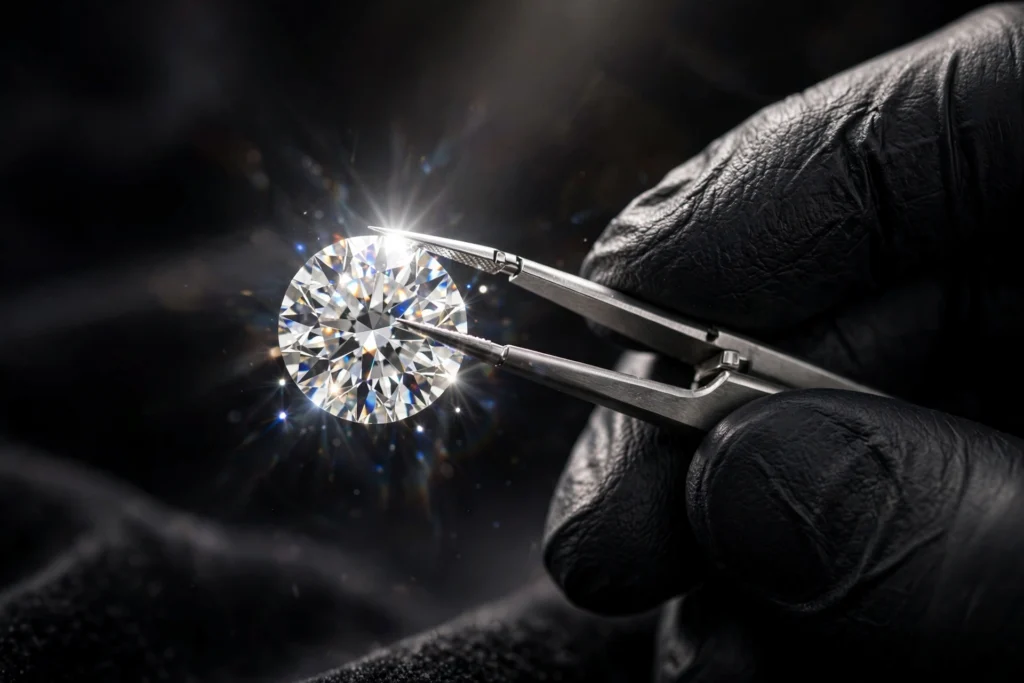
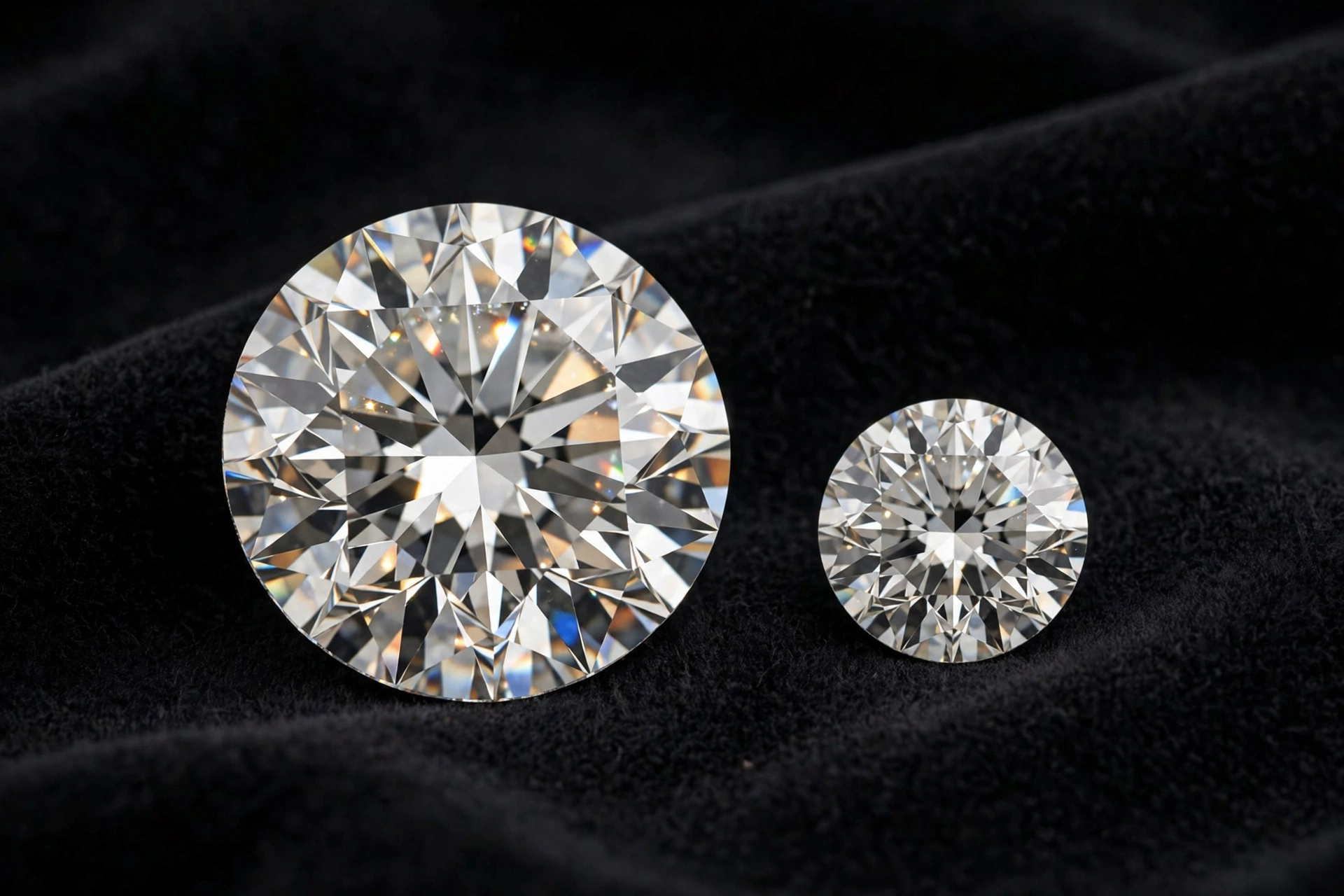
No. You cannot tell them apart with the naked eye, and neither can your friends, your family, or your jeweler. Both stones throw the same fire, brilliance, and sparkle, and both stones score 10 on the Mohs hardness scale. Even trained gemologists need advanced lab equipment and the laser inscription on the girdle to tell them apart. Can you really justify paying 5x more for a difference no one can see?
Labs inscribe most lab grown diamonds with a tiny laser marking, and graders read that inscription under magnification. You can verify the report number online, and you can match it to the stone in minutes. That inscription protects you, and it proves exactly what you bought.
Question 4: Are Lab Grown Diamonds Worth the Money?
Yes, for most buyers they are absolutely worth it. A 1-carat lab grown diamond costs $800 to $1,800 in 2027, and a 1-carat natural diamond costs $5,000 to $10,000 for the same look. A 2-carat lab grown diamond costs $1,800 to $4,500, and a 2-carat natural diamond costs $15,000 to $30,000. You get the same sparkle, the same hardness, and the same certification for a fraction of the price.
Price ranges based on US online retail listings for GIA/IGI certified stones, checked October 2026. Actual prices vary by seller, location, and specs.
You are worth it when you want maximum beauty for your budget, and lab grown gives you that win. You buy a bigger stone, a better cut, or a nicer setting with the savings, and you keep cash for the life you actually want. Smart money buys lab grown, and smart money never apologizes for it.
Question 5: Do Lab Grown Diamonds Hold Their Value?
Here comes the honest part nobody likes to say out loud. Natural diamonds hold resale value better than lab grown diamonds, and the market still treats natural stones as scarcer assets. Lab grown prices have fallen as production has grown, and analysts expect that gentle downward pressure to continue. If you buy a $1,500 lab grown diamond, you might resell it for $300 to $500, and you will lose a bigger percentage than a natural buyer loses.
But here is the other side of that math: you paid $1,500, not $8,000. The natural buyer who “holds value better” still loses thousands of dollars on resale. Neither stone works as an investment, and smart buyers treat the purchase as a love expense, not a retirement plan. You buy the diamond to wear and enjoy, and you let stocks handle the investing.
Question 6: Are Lab Grown Diamonds Ethical and Sustainable?
Lab grown diamonds avoid the worst mining problems, and that matters. Labs sidestep child labor, unsafe mines, and conflict zones, and they produce stones without digging up the earth. Natural mining has cleaned up a lot, and many mines now follow Kimberley Process rules and strict labor standards. Mining still displaces earth, uses water, and disrupts ecosystems, and no certificate erases that impact completely.
Labs are not impact-free either, and honesty demands that admission. Labs use a lot of electricity, and their footprint depends heavily on their power source. A lab that runs on renewable energy leaves a smaller footprint, and a lab that runs on coal leaves a much bigger one. You should ask your seller about sourcing and energy, and you should weigh both footprints with clear eyes.
Question 7: Should I Buy Lab Grown or Natural?
Do you care more about size and sparkle, or do you care more about story and scarcity? Your answer points you straight to the right stone, and you do not need to overthink it. You want maximum beauty for your budget, and lab grown diamonds give you that win. You want a stone that took billions of years to form, and natural diamonds give you that romance.
- You should choose lab grown if you want the biggest, brightest stone for your budget.
- You should choose lab grown if you plan to upgrade your jewelry in a few years.
- You should choose natural if you value rarity and long-term tradition over size.
- You should choose natural if you view the diamond as a family heirloom you will pass down.
- You should choose either if you simply love sparkle, and your heart will guide you better than any chart.
Lab Grown vs Natural: Side by Side
| Feature | Lab Grown Diamond | Natural Diamond |
| Real diamond? | Yes — pure carbon crystal | Yes — pure carbon crystal |
| Hardness | 10 Mohs | 10 Mohs |
| 1-carat price (2027) | $800 to $1,800 | $5,000 to $10,000 |
| Origin | Lab, grown in weeks | Earth, 1 to 3 billion years |
| Resale value | Lower | Higher |
| Certification | GIA / IGI | GIA / IGI |
How to Buy Smart (Whatever You Choose)
You get the best deal when you prioritize cut over carat, and an Excellent cut makes a smaller stone outshine a bigger dull one. You save money when you pick G to J color and VS2 to SI1 clarity, and most eyes cannot spot the difference from higher grades. You compare at least three sellers, and you compare total price, certificate, return policy, and warranty side by side. You ask for videos in daylight and indoor light, and you inspect the stone before you commit.
- Demand a GIA or IGI certificate, and skip sellers who offer no paperwork.
- Check the laser inscription, and confirm it matches the report.
- Pick Excellent cut first, and let cut drive your sparkle.
- Compare total cost, not just stone cost, and include setting and tax.

My Honest Take
IMO, lab grown diamonds win for 90% of buyers, and they win on value, size, and everyday practicality. FYI, I have seen buyers cry happy tears over lab grown rings, and I have never seen anyone squint at a stone and ask about its origin at dinner. Natural diamonds still carry a magic that science cannot copy, and that magic lives in their age and rarity. You cannot go wrong when you choose with your heart and your budget, and you will love your diamond for the right reasons.
The Bottom Line
Lab grown diamonds are real, and they are worth it for most buyers in 2027. You get the same chemical makeup, the same hardness, and the same sparkle for 70% to 85% less than natural. You make the right choice when you match the stone to your budget, your values, and your life. So pick the diamond that makes you smile every time you look at it, and wear it proudly.
Sources
GIA grades both lab grown and natural diamonds, and it publishes grading standards for buyers: https://www.gia.edu/lab-grown-diamond. IGI certifies lab grown diamonds worldwide, and it verifies cut, color, clarity, and carat: https://www.igi.org. FTC sets jewelry advertising rules in the US, and it requires sellers to disclose lab grown origin clearly: https://www.ftc.gov/legal-library/browse/rules/jewelry-precious-metals-pewter-jewelry-guides. Written by the I Love Jewelry Team. Last updated: October 2026. Related reading: lab grown diamond engagement rings — our complete buying guide for 2027.