You want to propose, you want the ring to wow her, and you do not want to empty your savings to do it. I have watched friends panic over engagement rings, and I have watched them overpay because no one gave them a clear plan. This guide gives you that plan for 2027, and it walks you through budget, shape, setting, and the 4Cs step by step. You will finish knowing exactly what to buy, what to skip, and how to get a ring she loves.
Key Takeaways
- Lab grown engagement ring cost runs $1,100 to $3,500 all-in in 2027, and the stone drives most of that price.
- 1 to 1.5 carats hits the sweet spot for size, sparkle, and value for most buyers.
- Excellent cut beats a bigger dull stone every time, and cut has the biggest impact on sparkle.
- G-J color and VS2-SI1 clarity offer the best value, and eye-clean beats flawless on paper.
- Demand a GIA or IGI certificate, and skip sellers who offer no paperwork.
Short Answer: Buy a 1 to 1.5-carat, Excellent cut, G-J color, VS2-SI1 clarity lab grown diamond with a GIA or IGI certificate, set in gold or platinum. You pay $1,100 to $3,500 all-in for most lab grown engagement rings in 2027, and you get the same sparkle as natural for 70% to 85% less. You pick shape and setting for style, and you pick cut and certificate for quality.

What Is a Lab Grown Diamond Engagement Ring?
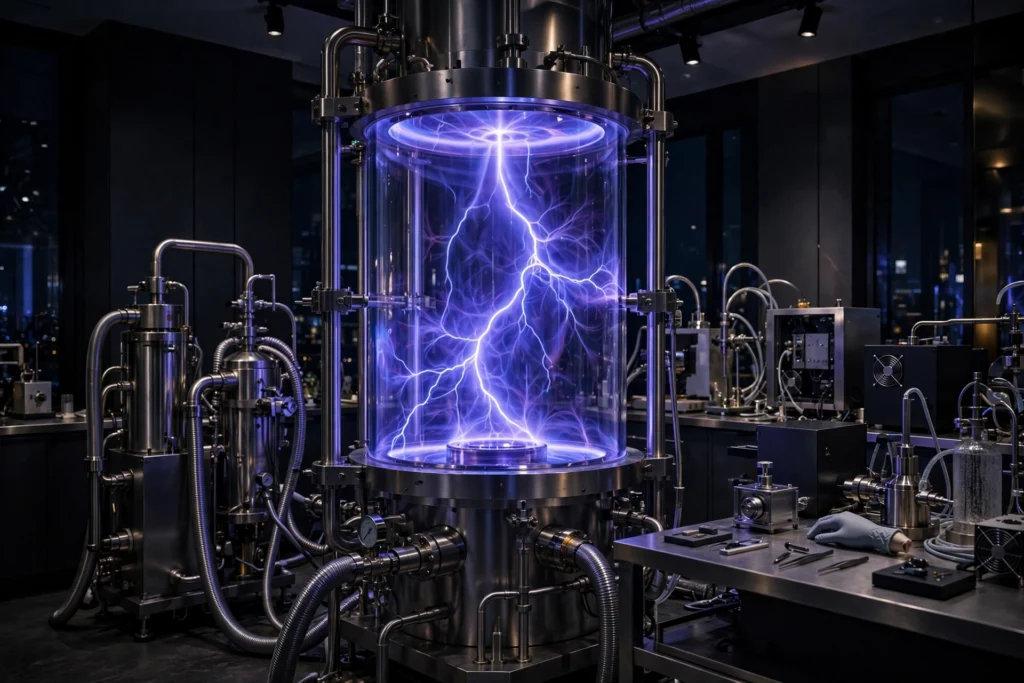
A lab grown diamond engagement ring pairs a real lab grown diamond with a gold or platinum setting, and jewelers design it for everyday wear. Labs grow the diamond with HPHT or CVD methods, and the stone shares the same chemical makeup, hardness, and sparkle as a natural diamond. Jewelers set the stone in a solitaire, halo, or pavé setting, and the setting protects the stone while it shows off its fire. You get a real, certified, dazzling ring, and you pay far less than a natural ring with the same look.
How Much Should You Budget in 2027?
Your budget sets your options, and a clear budget keeps you from overspending in the store. A 1-carat lab grown ring with a gold setting totals $1,100 to $2,500 all-in, and a 1.5-carat ring with a platinum setting totals $2,000 to $3,500 all-in. A 2-carat lab grown ring totals $2,500 to $5,500 all-in, and the same natural ring totals $15,000 to $30,000 for the stone alone. You control the total by picking stone size first and setting second, and you stretch your budget further with a simpler design.
Price ranges based on US online retail listings for GIA/IGI certified lab grown diamonds, checked October 2026. Actual prices vary by seller, location, and specs. Compare stones with the same cut, color, clarity, and certification.
| Ring | Lab Grown Total 2027 | Natural Total (Stone Only) |
|---|---|---|
| 1 carat + gold solitaire | $1,100 to $2,500 | $5,000 to $10,000 |
| 1.5 carat + platinum halo | $2,000 to $3,500 | $10,000 to $20,000 |
| 2 carat + platinum setting | $2,500 to $5,500 | $15,000 to $30,000 |
- Under $1,500: You buy a 0.75 to 1-carat stone with a simple gold solitaire, and you get a classic ring.
- $1,500 to $3,000: You buy a 1 to 1.5-carat stone with a halo or pavé setting, and you get serious sparkle.
- $3,000 to $5,500: You buy a 1.5 to 2-carat stone with a premium platinum setting, and you get a showstopper.
Choose the Right Shape
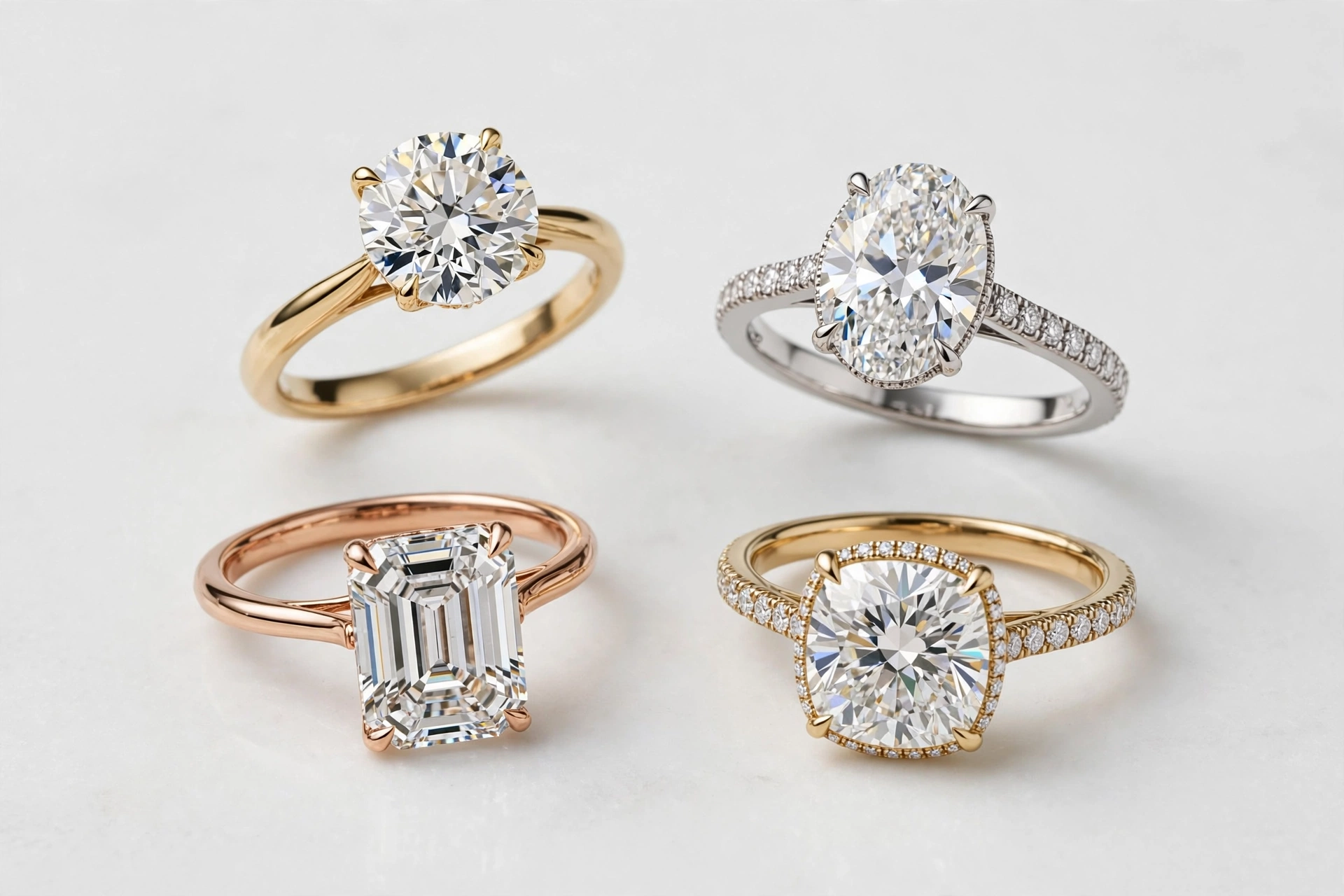
Shape sets the personality of the ring, and your partner’s style points you to the right one. Round brilliants throw the most sparkle, and they suit classic tastes. Oval and pear shapes look bigger per carat, and they suit modern tastes. Emerald and cushion shapes look elegant and vintage, and they suit buyers who love clean lines. You pick the shape she will love looking at every day, and you let that choice guide the setting.
Round Brilliant: Maximum Sparkle
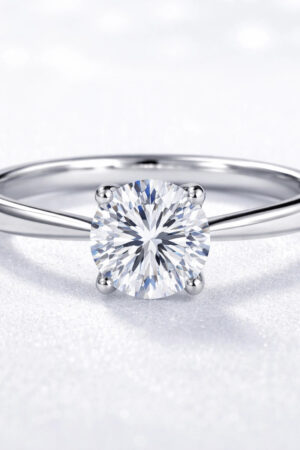
Round brilliants cost the most per carat, and cutters shape them for maximum fire and brilliance. You pick round when you want classic sparkle, and you accept the premium for that timeless look. A 1-carat round in an Excellent cut outshines a bigger fancy shape, and most buyers notice that sparkle first.
Oval and Pear: Bigger Look for Less
Oval and pear shapes stretch the stone’s face-up size, and they make a 1-carat stone look like a 1.2-carat stone. You save 10% to 25% versus round, and you get an elegant, elongated look. You check for a bow-tie shadow in oval stones, and you pick one with minimal darkening in the center.
Emerald and Cushion: Elegant and Vintage
Emerald cuts show step facets and clean lines, and they reveal inclusions more easily than round cuts. You pick VS1 or higher clarity for emerald, and you enjoy its hall-of-mirrors elegance. Cushion cuts mix vintage charm with soft sparkle, and they hide inclusions better than emerald.
Choose the Right Setting
Setting protects the stone, and it defines how the ring looks on the hand. Solitaire settings put the diamond front and center, and they suit buyers who love simplicity. Halo settings surround the center stone with small diamonds, and they make the center stone look bigger. Pavé settings line the band with tiny diamonds, and they add sparkle from every angle. You pick the setting that matches her daily life, and you remember that a busy lifestyle calls for a sturdier design.
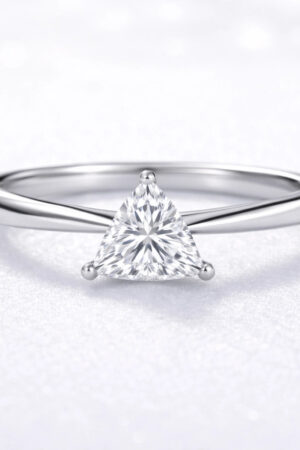
- Solitaire: Classic, timeless, and easiest to clean. Gold solitaire costs $300 to $700.
- Halo: Makes the center stone look 0.5 carats bigger. Platinum halo costs $800 to $1,500.
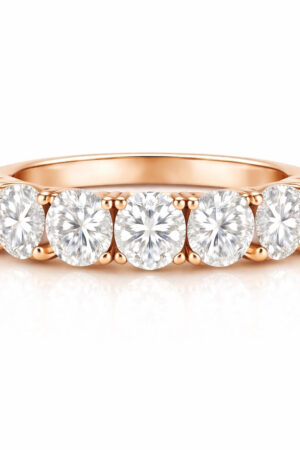
- Pavé: Adds sparkle along the band. You check that small stones sit securely.
- Three-Stone: Symbolizes past, present, and future. You balance side stones with the center stone.
- Bezel: Wraps metal around the stone. You pick bezel for active lifestyles and maximum protection.
The 4Cs That Actually Matter for a Ring
Cut drives sparkle more than any other factor, and an Excellent or Ideal cut costs more because cutters shape it for maximum light return. Color drives price next, and D to F stones cost more than G to J stones that still look white to most eyes. You pick G to J for value, and you let cut do the heavy lifting. You compare stones side by side in daylight, and you trust your eyes over the certificate alone.
Clarity drives price too, and VS1 to VS2 stones cost more than SI1 to SI2 stones that still look eye-clean. Carat drives the headline price, and a 2-carat stone costs more than twice a 1-carat stone because larger stones stay harder to grow clean. You pick VS2 to SI1 clarity for the best value, and you check that the stone looks clean to the naked eye. You ask for videos in daylight and indoor light, and you inspect the stone before you commit.
- Cut: Pick Excellent / Ideal first. Cut has the biggest impact on sparkle.
- Color: Pick G-J. It saves 20% to 30% and still looks white.
- Clarity: Pick VS2-SI1. Eye-clean beats flawless on paper.
- Carat: Pick 1 to 1.5 carats for the sweet spot. Size impresses, cut wows.
Certification, Sizing, and Smart Buying Checklist
You should never buy an engagement ring without a certificate, and you should treat that certificate like a passport for your stone. GIA and IGI grade lab grown diamonds, and they measure cut, color, clarity, and carat for each stone. You verify the report number online, and you match the laser inscription on the girdle to the certificate in minutes. You also confirm the return policy and warranty, and you give yourself time to see the ring in natural light at home.
- Demand a GIA or IGI certificate, and skip sellers who offer no paperwork.
- Confirm the ring size with a free sizer or a ring she already wears, and ask about free resizing.
- Check the metal: 14k gold saves money, 18k gold feels richer, platinum lasts longest.
- Check the warranty: You want coverage for loose stones, prong tightening, and resizing.
- Compare three sellers on total price, certificate, return policy, and warranty.

Lab Grown vs Natural for Engagement Rings
Natural diamonds still cost 4x to 5x more than lab grown diamonds, and that gap keeps widening as lab production grows. A 1-carat natural ring costs $5,300 to $10,700 all-in, and a 1-carat lab grown ring costs $1,100 to $2,500 all-in for the same look. A 2-carat natural ring costs $15,000 to $30,000 for the stone alone, and a 2-carat lab grown ring costs $2,500 to $5,500 all-in. Can you really justify paying 5x more for a difference no one can see? That question answers itself once you compare the numbers.
- Lab grown: More size for less money, same sparkle, same hardness, same certification.
- Natural: Rarity and a billion-year story, but a steep premium for the same look.
- Resale: Natural holds value better, but neither ring works as an investment.
- Ethics: Labs avoid mining issues, but labs still use energy. Mines follow Kimberley Process rules, but mining still impacts land and water.
My Honest Take
IMO, lab grown wins big for engagement rings in 2027, and buyers get more ring for less money than ever before. FYI, I have seen buyers pick a 2-carat lab grown ring for under $4,000, and I have never seen anyone regret choosing size and sparkle over a label. Natural diamonds still carry a magic that science cannot copy, and that magic lives in their age and rarity. You cannot go wrong when you buy with your eyes and your budget, and you will love your ring for the right reasons.
The Bottom Line
Lab grown engagement rings cost $1,100 to $3,500 all-in for most buyers in 2027, and they deliver real sparkle for far less than natural. You pick Excellent cut, G-J color, VS2-SI1 clarity, and a GIA or IGI certificate, and you match shape and setting to her style. You make the right choice when you match the ring to your budget, your values, and your life. So pick the ring that makes her smile every time she looks at it, and propose with confidence.
Frequently Asked Questions
How much does a lab grown diamond engagement ring cost in 2027?
Most lab grown engagement rings cost $1,100 to $3,500 all-in in 2027, including stone and setting. Price ranges based on US online retail, checked October 2026; actual prices vary by seller and specs.
What is the best carat size for an engagement ring?
Most buyers pick 1 to 1.5 carats for the sweet spot of size, sparkle, and value. You get a ring that looks substantial without overpaying for rarity.
What shape is best for a lab grown engagement ring?
Round brilliants deliver maximum sparkle, and oval shapes deliver the biggest look per carat. You pick the shape that matches her style, and you let that choice guide the setting.
What setting is best for everyday wear?
Solitaire and bezel settings protect the stone best for everyday wear. You pick bezel for active lifestyles, and you pick solitaire for classic simplicity.
Are lab grown diamond engagement rings real?
Yes. Labs grow real diamonds with the same chemical makeup, hardness, and sparkle as natural diamonds. Gemologists classify them as real diamonds.
Do lab grown engagement rings hold their value?
Natural rings hold resale value better than lab grown rings. Neither ring works well as an investment, so buy for love, not profit.
Should I buy GIA or IGI certified?
Buyers should demand either GIA or IGI certification, and both labs grade cut, color, clarity, and carat. You verify the report number online and match the inscription to the certificate.
What metal should I choose for an engagement ring?
Platinum lasts longest and costs the most, and 14k gold saves money while 18k gold feels richer. You pick the metal that matches her other jewelry and your budget.
How do I find her ring size without asking?
You borrow a ring she already wears and measure it, or you ask a close friend or family member for help. Most jewelers offer free resizing, so you confirm that policy before you buy.
Will lab grown engagement ring prices drop more?
Analysts expect prices to keep falling slowly as production grows. Prices will not crash to zero because labs still pay for energy, equipment, and labor.
Sources
GIA grades both lab grown and natural diamonds, and it publishes grading standards for buyers: https://www.gia.edu/lab-grown-diamond. IGI certifies lab grown diamonds worldwide, and it verifies cut, color, clarity, and carat: https://www.igi.org. FTC sets jewelry advertising rules in the US, and it requires sellers to disclose lab grown origin clearly: https://www.ftc.gov/legal-library/browse/rules/jewelry-precious-metals-pewter-jewelry-guides. Written by the I Love Jewelry Team. Last updated: October 2026.



Comments (4)